
Last updated November 15, 2026
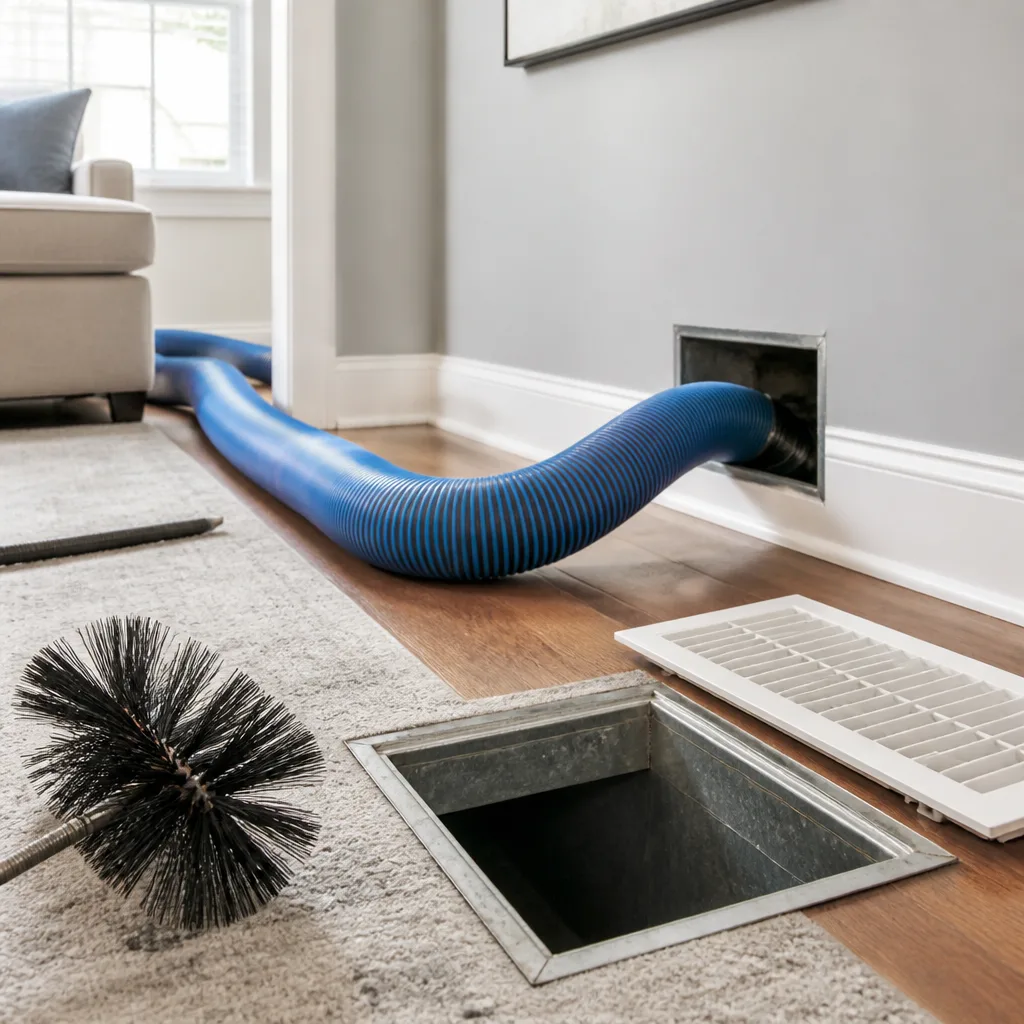 Whole-home duct cleaning
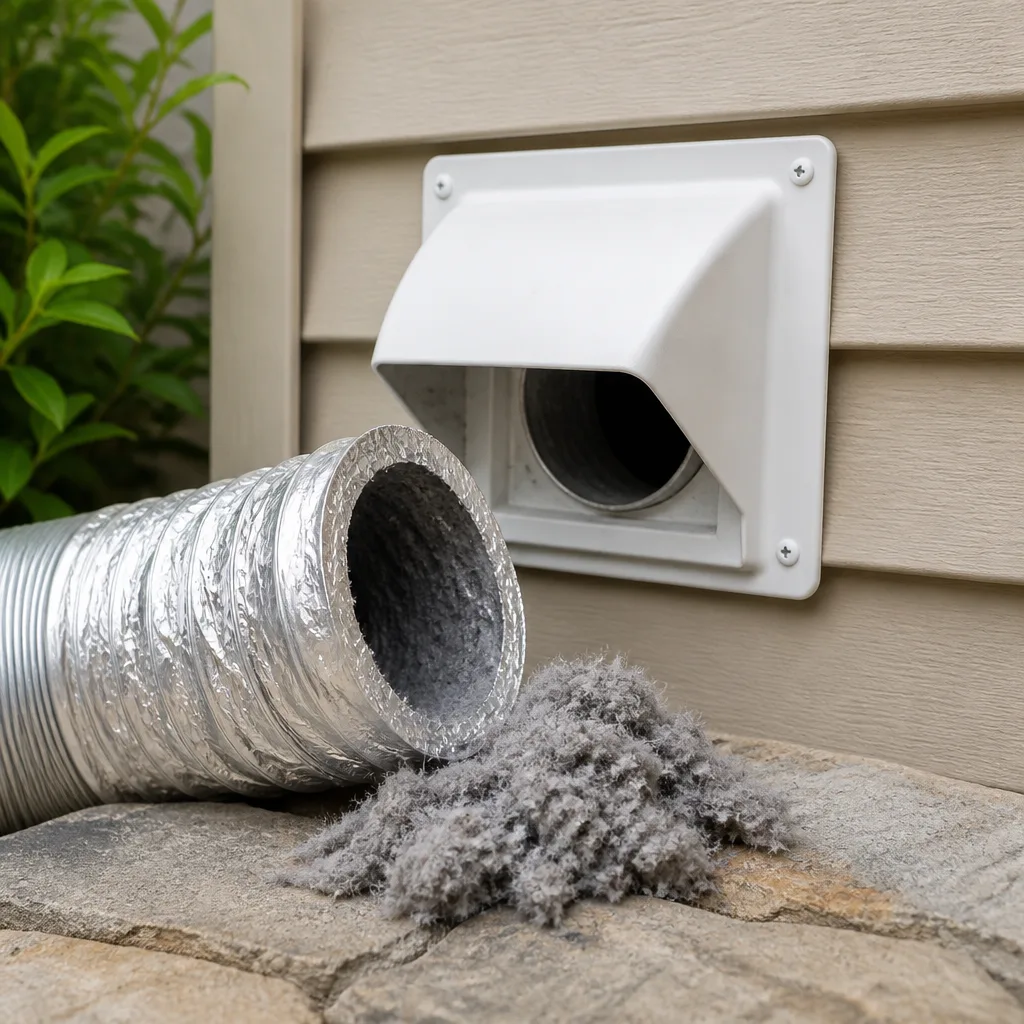 Dryer vent cleaning
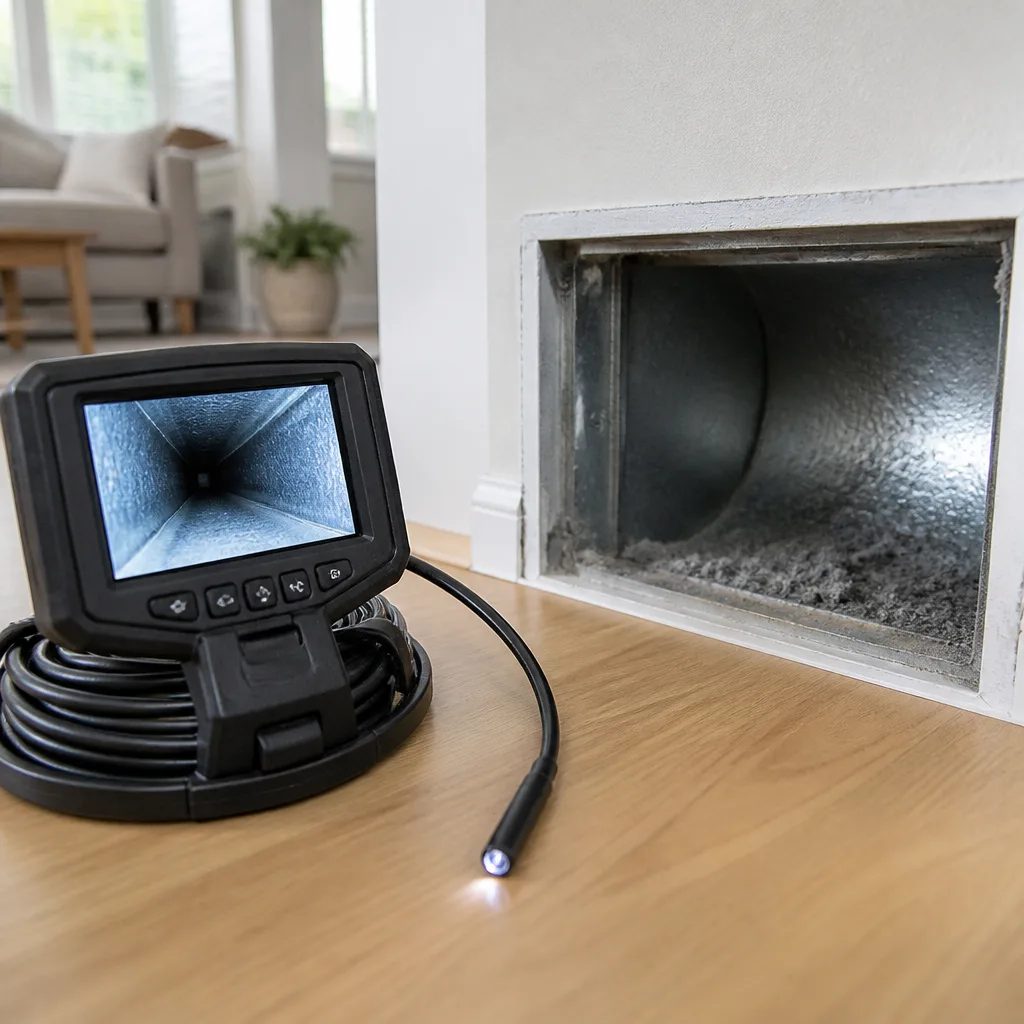 Camera inspection
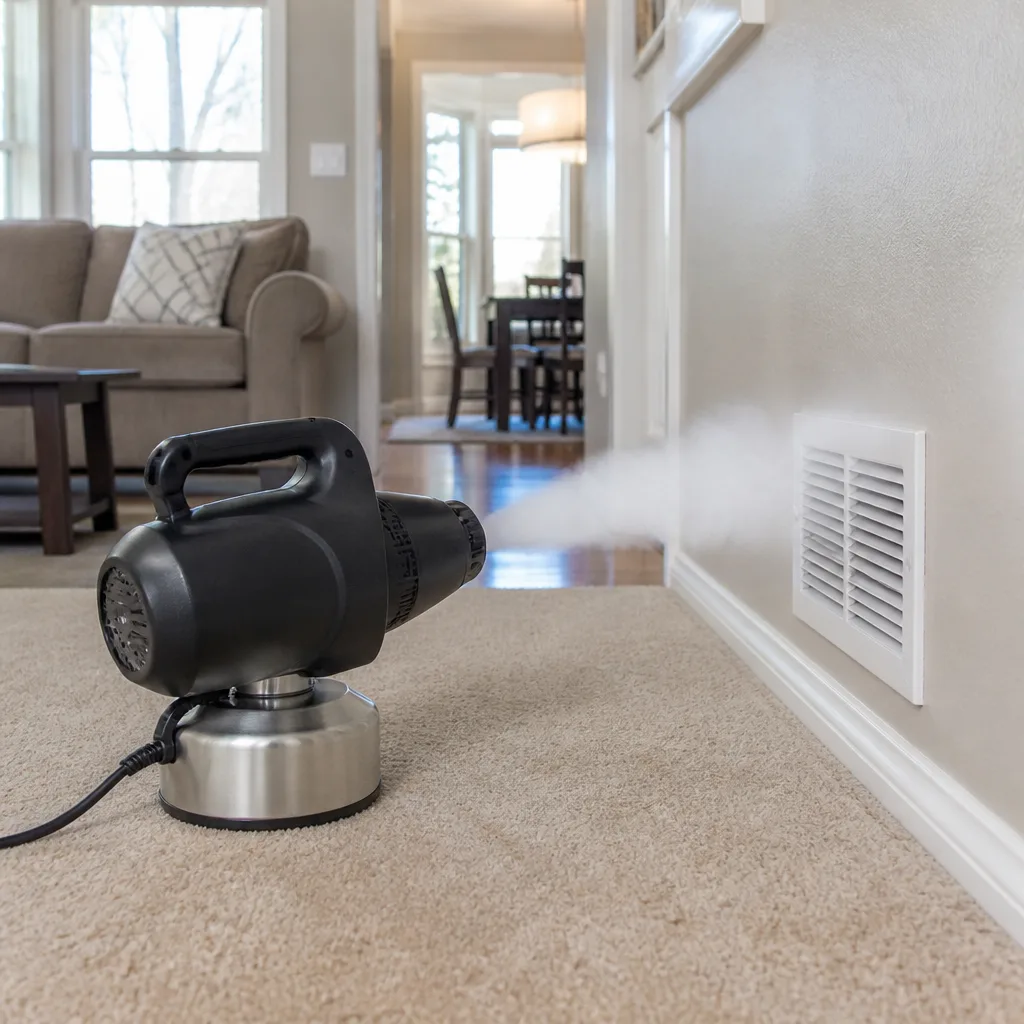 Sanitizing & deodorizing
Whole-system duct and dryer vent check with before-and-after photos - you see exactly what came out of your vents
That "$99 whole-house special" is a bait ad - the real number appears once they are in your hallway, or the "clean" is a shop-vac at the register. We photograph the inside of your ducts before and after instead.
DIY vs Professional Air Duct Cleaning: The Sunrise Manor Homeowner’s Decision Guide
A dryer-vent brush kit and a shop vac will clean your registers. They will not pull embedded debris from the trunk line fifteen feet past the nearest access point, and the reason has nothing to do with how hard you scrub. It comes down to one sentence of physics: moving settled particulate out of a duct system requires more negative pressure than any consumer tool can produce. That single difference decides which parts of duct care you can handle and which parts need commercial equipment. In this guide we’ll draw that line clearly for Sunrise Manor homeowners, from what you can legitimately self-service to the equipment threshold where DIY stops working, so you can spend your effort where it actually pays off.
Quick Answer
You can responsibly clean supply registers, wash return grilles, and visually inspect accessible duct sections yourself. You cannot remove embedded debris from trunk lines, plenum runs, or coil-adjacent ductwork without professional negative-pressure HEPA extraction in the 1,500 – 4,000 CFM range. In Sunrise Manor, where caliche dust settles into ductwork and kicks back up the moment airflow is disturbed without containment, DIY cleaning past the register often makes indoor air worse rather than better.
Styles & brands we work with
- Whole-home duct cleaning
- Dryer vent cleaning
- Camera inspection
- Sanitizing & deodorizing
Table of Contents
- What a Homeowner Can Legitimately Do
- The Equipment Threshold Where DIY Stops Working
- The Sunrise Manor DIY Risk: Caliche Dust Without Containment
- Cost Comparison, Honestly Structured
- What Professional Duct Cleaning Actually Involves
- Dryer Vent Cleaning: The One Vent You Shouldn’t Leave to Chance
- The Hybrid Approach: Extending Time Between Cleanings
- When Cleaning Reveals a Repair Problem
What a Homeowner Can Legitimately Do
There’s real work you can do yourself, and doing it well actually extends the life of a professional cleaning. The key is knowing exactly which parts of the air system are surface tasks and which are extraction tasks. Supply registers sit at the very endpoint of the system, where dust lands on surfaces you can reach with a vacuum brush. Return grilles collect lint and dust directly on the face. Accessible duct sections near the air handler can be inspected with a flashlight. None of that requires special equipment.
Here’s what a reasonable homeowner maintenance routine looks like in a Sunrise Manor home:
- Remove and wash supply registers. Unscrew the vent covers, soak them in warm soapy water, scrub with a soft brush, and let them dry fully before reattaching. Do this a couple of times a year.
- Vacuum return grilles on both faces. Return air intakes collect a visible mat of lint and dust. Vacuum the face and the slats, and check behind the grille if it’s a hinged return housing a filter.
- Replace the air filter on schedule, not on a fixed calendar date. Check it monthly. Desert dust means filters load faster than manufacturer labels suggest. A clogged filter stresses the blower and drives up operating cost.
- Flashlight into accessible duct runs. Pull the register and shine a light down. Look for debris piles, gaps at seams, or detached flex liner. Note what you see rather than reaching in.
- Keep the return path clear. Furniture, rugs, and storage boxes that block return air reduce system efficiency and increase how fast dust settles in the ducts.
Notice what’s missing from that list: nothing about loosening debris inside the trunk lines. That’s deliberate, and we’ll explain why in the next section. If you want a baseline professional cleaning to establish a known-clean starting point, our air duct cleaning service is designed to reset the system so your own maintenance actually holds. Our technicians have up to 13 years of experience reading what a flashlight inspection is really showing.
The Equipment Threshold Where DIY Stops Working
Professional duct cleaning relies on negative pressure. A commercial extraction unit connects to the system, creates a strong vacuum, and pulls loosened debris toward a collection point while agitation tools knock material off the duct walls. The airflow matters. Professional negative-pressure HEPA extraction moves roughly 1,500 to 4,000 cubic feet per minute. A shop vac moves nowhere near that, and a household upright produces a fraction of even a shop vac’s airflow.
Why does the number matter more than the brush?
- Dust doesn’t sit loose on the duct floor. Over time, particulate bonds to the walls with a mix of humidity, static, and heat cycling. It has to be mechanically agitated to release, then pulled away immediately or it just resettles.
- Fifteen feet of trunk line is a long distance for a small vacuum. Airflow falls off with distance inside a duct. A consumer tool loses its pull well before it reaches the middle of a long run, no matter how good the nozzle is.
- Containment is part of the physics. Professional systems seal the work area and route extracted air through HEPA filtration. Without that, everything you loosen goes into the living space instead of into the collector.
- Equipment grade matters to the pros, too. The firms that do this work well use systems like Rotobrush and Nikro, the same class of equipment restoration and abatement contractors rely on. That’s not brand-name garnish; it’s what produces the airflow and filtration the job requires.
There’s a second equipment layer: the tools that agitate inside the duct. Rotary brushes, air whips, and compression tools reach and loosen bonded debris in ways a hand brush can’t. And when the system has a filtration or humidity component, professional familiarity with hardware like Honeywell or Aprilaire controls matters, because cleaning around that equipment without understanding it can cause problems. This is why we treat ducts, vents, and filtration as one connected air system rather than a list of unrelated tasks.
The Sunrise Manor DIY Risk: Caliche Dust Without Containment
Sunrise Manor sits in the Las Vegas Valley, and the valley’s soil is bound in large part by caliche – a calcium-carbonate-cemented layer that, when disturbed, produces a fine, alkaline dust. That dust finds its way into return air, settles into ductwork, and binds to surfaces over time. It also behaves in a specific way when it’s disturbed: it plumes.
Here’s the practical problem for a DIY cleaner. A homeowner working a register with a shop vac loosens settled dust but has no way to contain it. The vacuum catches some. The rest puffs out of the register and into the room. In a Sunrise Manor home with a running HVAC system, the blower picks that dust up and distributes it through every room. The visible result is a fine grey film on furniture. The invisible result is particulate in the breathing zone, which is the opposite of why anyone cleans ducts.
Professional extraction avoids this because containment is part of the equipment design, not an afterthought. The vacuum unit is outside the living space or sealed to the system, the register openings are masked, and the system runs under controlled negative pressure so loosened material moves toward the collector, not toward the sofa. In our experience in Sunrise Manor, the dust plume problem is the single strongest argument against aggressive DIY work. Light register cleaning and filter maintenance don’t trigger it. Poking a brush down a trunk line does. Our technicians have seen what a valley home’s ducts look like after a dry, windy spring, and the containment step is not something we’d skip to save time.
The seasonal rhythm in this part of Nevada matters too. Monsoon-season wind events push dust against the house, and homes run their systems hard through the long cooling season. Duct interiors load faster here than the general internet advice suggests. If you’re new to the area, our guide to Sunrise Manor covers what’s worth knowing about the neighborhood and its housing stock.
Cost Comparison, Honestly Structured
DIY vs professional duct cleaning is not a simple price comparison, because the two approaches don’t achieve the same result. What follows is an honest breakdown of what each path actually costs, in money and time.
What DIY Costs
- Equipment: A shop vac you may already own, plus brushes and a dryer-vent kit if you buy one. Modest on paper.
- Time: A full afternoon or more for a whole-house register-and-grille clean, spread across every vent in the home. Multiply that by the frequency needed to keep up.
- Result: Registers clean, grilles clean, surface dust reduced. Trunk lines untouched. Bonded debris untouched. Contaminant spread risk in a caliche-dust home increases, not decreases.
What Professional Cleaning Costs
Pricing depends on the size, configuration, and condition of your system. You should expect a legitimate estimate to reflect the whole system rather than a per-vent teaser number. A few structural points worth knowing:
- Estimate scope explicitly. The number should cover the full system – every supply and return, the trunk lines, and the air handler connection – not a base rate with surcharges for vent count.
- Confirm equipment. Ask what extraction and agitation equipment will be used. A firm that names Rotobrush or Nikro and HEPA filtration is describing a real process. A firm that shows up with a shop vac is not.
- Ask about containment. If the answer isn’t clear, that’s your answer.
- Ask about repair. A cleaning will sometimes reveal detached flex liner, crushed duct runs, or leaking seams. Firms that can’t repair what they find will either ignore it or leave the problem to someone else.
In our experience, the biggest false economy in the market is a cheap quote that turns into a larger invoice once the crew arrives. The right structure is one flat price per system, agreed before any work starts, with the estimate in writing. That’s what a defensible price looks like in Sunrise Manor and anywhere else.
What Professional Duct Cleaning Actually Involves
Understanding the real process makes the gap between DIY and professional obvious. A proper whole-system clean is a sequence, not a one-step vacuum run.
- Inspection first. The technician walks the system, opens accessible registers, and checks the air handler connection. This is where duct damage gets found, and it’s why repair capability matters.
- Containment and setup. Register openings are masked, the collection unit is connected, and the system is put under controlled negative pressure.
- Agitation. Rotary brushes and compressed-air tools work the duct walls to break bonded debris loose, run through supply runs, returns, and the main trunk.
- Extraction. The high-airflow HEPA unit captures loosened material at the collector. The airflow is what moves debris fifteen feet down a duct to the collection point.
- Filter and air-handler attention. Filters get checked or replaced, and any filter housing issues noted.
- Documentation. Before-and-after photographs of your own system confirm what was done. Ask for them; any firm doing real work can show you.
That last point is worth sitting with. The single most reliable defense against bait-and-switch pricing is a process you can see in photographs and an estimate you hold in writing. Our Kingsley Air Duct Cleaning estimates follow that structure: one flat price per system, agreed before work starts, no per-vent pricing, photos of your own ducts when the job is done.
Dryer Vent Cleaning: The One Vent You Shouldn’t Leave to Chance
Every other duct in your home moves conditioned air you breathe. The dryer vent moves hot, moisture-laden air and lint, and lint is combustible. A clogged dryer vent is a known residential fire hazard, not an aesthetic issue. This is the one air pathway in a Sunrise Manor home where DIY is genuinely risky in a way that other cleaning tasks are not.
Why is it harder than it looks? Dryer vent runs are often long and full of elbows by the time they exit a house, especially in some of the older Sunrise Manor housing where the vent path isn’t a straight shot through the wall. A homeowner with a vent brush kit can push debris around inside a run. Pushing debris deeper, or failing to remove the lint bound to the vent walls, is the common outcome. The bigger risk is disturbing a run and disconnecting flexible sections you can’t see, which can send hot air into a wall cavity.
Professional dryer vent cleaning removes the lint rather than stirring it, verifies airflow end to end, and checks the vent run for crushed sections or separated joints. We treat it as a discrete service because that’s what it is. If it’s been a while since your dryer vent was last cleared, it deserves a place on the maintenance calendar right alongside the filter change.
The Hybrid Approach: Extending Time Between Cleanings
The most cost-effective path for most Sunrise Manor homeowners is neither pure DIY nor waiting until the ducts are bad enough to demand professional attention. It’s a hybrid: a professional baseline clean, followed by disciplined homeowner maintenance that keeps the system at that baseline for longer.
Here’s what that looks like in practice:
- Baseline professional clean to reset the system. Then you know where the starting line is.
- Monthly filter checks with replacement on a condition basis rather than a fixed date. Desert dust means the label interval is a floor, not a target.
- Quarterly register and grille maintenance. Two register-and-grille clean-outs a year catches most of what accumulates at the endpoints.
- Annual visual inspection of accessible ductwork during the register maintenance. If something looks off, that’s your signal to call for a proper look.
- Re-clean based on condition, not a calendar. A home near a dusty lot with a dog will need attention sooner than a tightly sealed home with no pets. Watch for increased dust settling on furniture, whistling at registers, or noticeable airflow reduction.
What changes the timeline most? Renovation work. Sanding, drywall, and insulation projects in a Sunrise Manor home generate a fine particulate that finds its way into return ducts and binds there. If you’ve just finished a remodel, don’t wait for the calendar – get inspected. Duct cleaning after major renovation should go around, or be closely followed by, a filter change. Attention to filtration hardware from a brand like Honeywell or Aprilaire supports that, and our technicians have the working familiarity with that equipment to say what makes sense for your setup.
When Cleaning Reveals a Repair Problem
Here’s the situation most cleaning discussion misses. A duct system is an enclosure, and enclosures fail. A professional cleaning often surfaces problems you can’t see from a register: flex liner detached at a connector, a duct run crushed behind drywall, a seam that has separated, or a junction that was never sealed properly. Those defects leak conditioned air into wall cavities and attics, and let unfiltered air back into the system.
Why does this matter to the DIY-vs-professional question? Because a homeowner doing surface maintenance will never find these problems, and a firm that only cleans will find them and leave them alone. The practical answer is that a serious air-system specialist offers cleaning and repair together, so the inspection findings become the work – one relationship, no second contractor, no leftover defects.
If you’re seeing reduced airflow from certain rooms, whistle at a register, or unexplained dust settling near one particular wall, the cause may be duct damage rather than duct dirt. In our experience, that’s worth a look before you spend money cleaning a system that will leak the benefit away. Abatement Technologies filtration products are part of the toolkit we work with when an air handler needs additional containment or a specific filter class is required. Whatever the finding, we’d rather you know than not. A free estimate can settle the question. Call (844) 719-0477. We answer 24/7. Fast dispatch from 7am to 7pm, Sunday through Friday.
Common Mistakes to Avoid
- Running a shop vac down a trunk line. Loosening bonded debris without containment sends it into the living space, which is worse than leaving it in place. In a caliche-dust home like Sunrise Manor’s, the spread is what matters, not the cleanup.
- Believing a low per-vent price is real. A teaser rate that jumps once the crew is on site is the market’s standard bait-and-switch. Ask for a whole-system flat price in writing before work begins.
- Skipping the before-and-after photos. If a firm can’t show you what was removed from your own ducts, you have no way to confirm the work happened. Ask up front.
- Cleaning ducts but ignoring the air handler connection. The return-side ductwork near the air handler is where the system pulls hardest, and where the most debris settles. Cleaning endpoints and stopping there misses the priority zone.
- Treating the dryer vent as a next-time job. Dryer vent lint is combustible, and a run of pushed-around lint is a liability, not a fix. This one is a professional task.
- Cleaning before checking for duct defects. A leaky duct run wastes the work. Look first. In Sunrise Manor homes where duct access is limited behind drywall, that inspection step is where real value shows up.
- Replacing filters on a fixed schedule regardless of dust load. Desert environments load filters faster than the label suggests. Check monthly and replace on condition.
See the difference
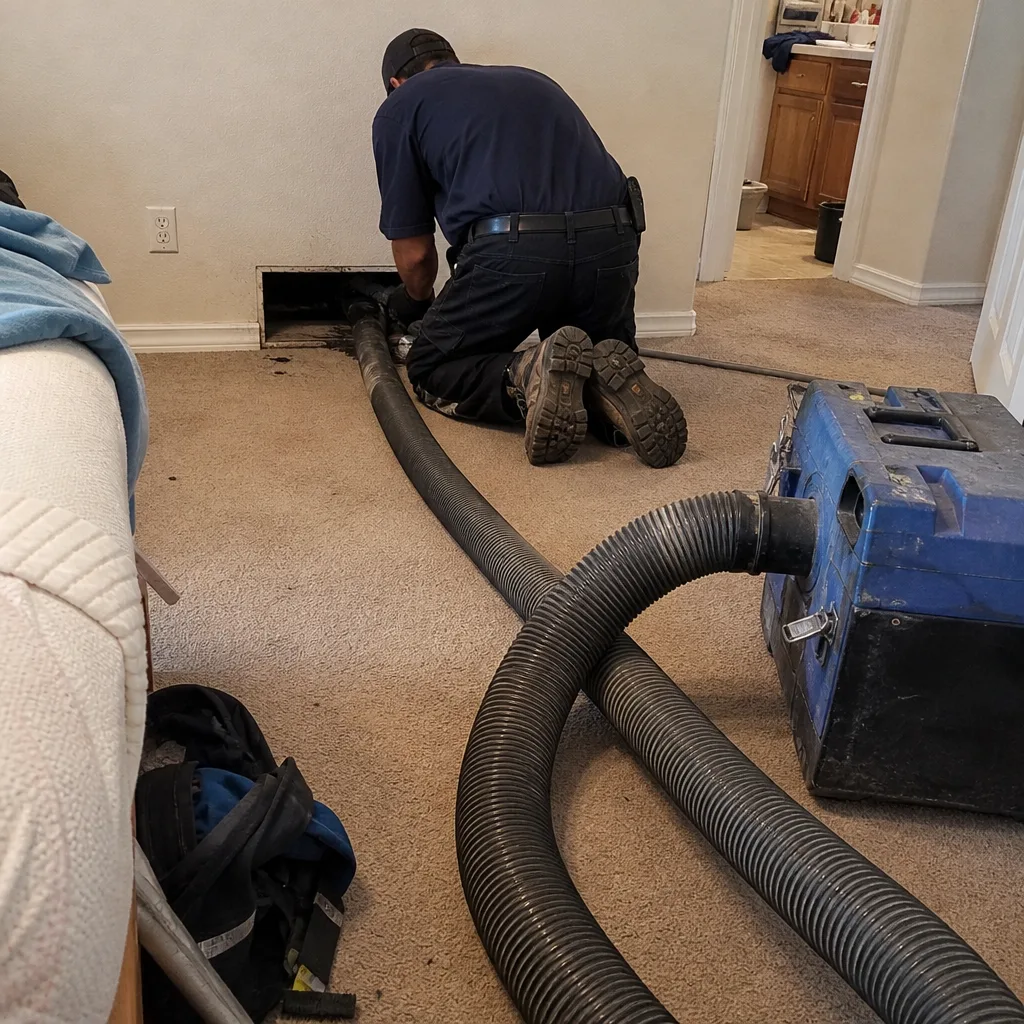 Before
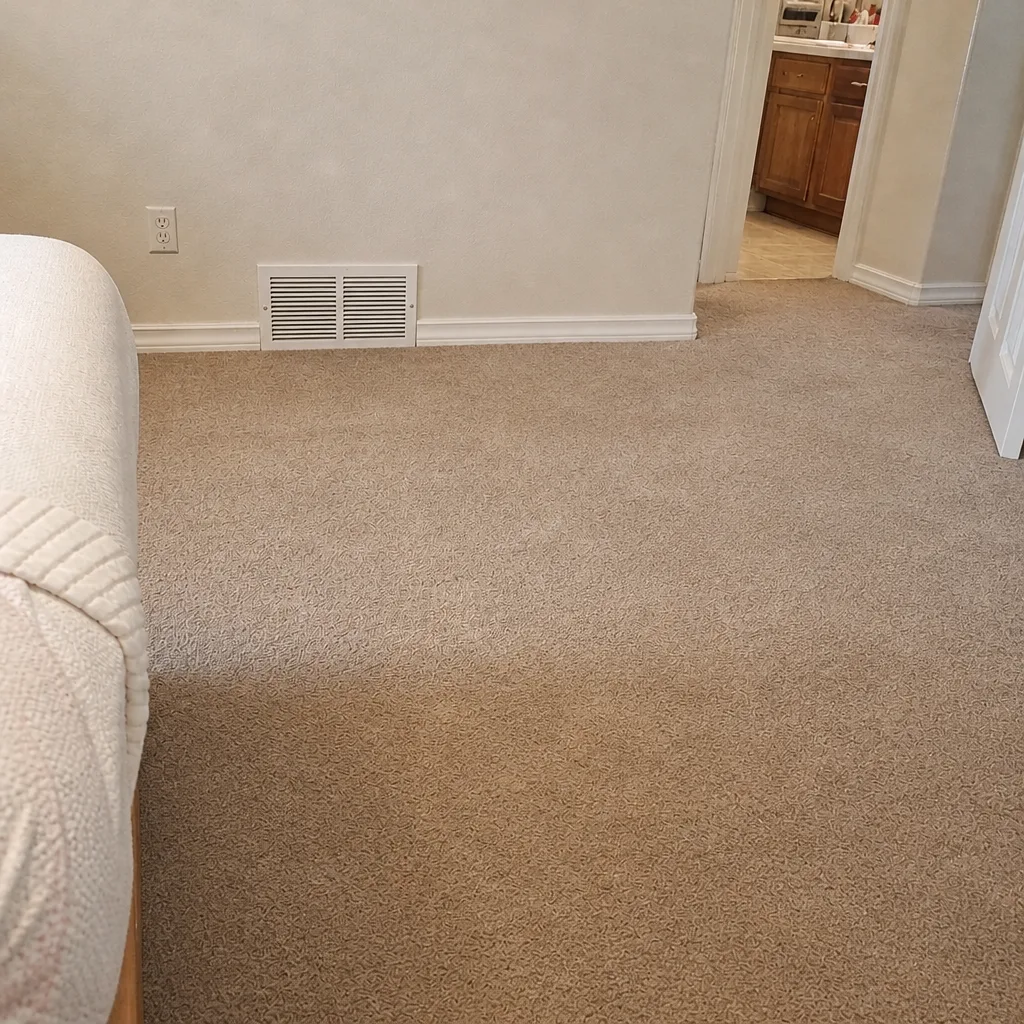 After
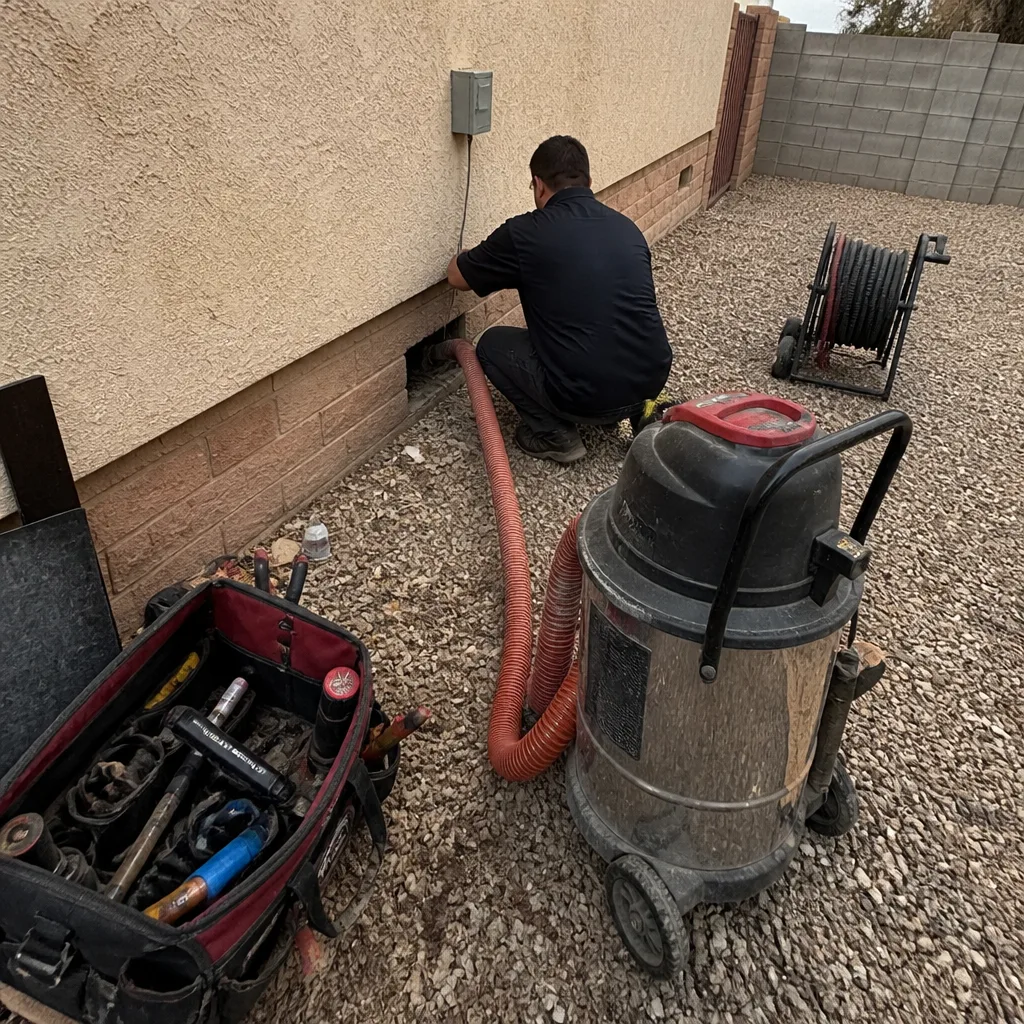 Before
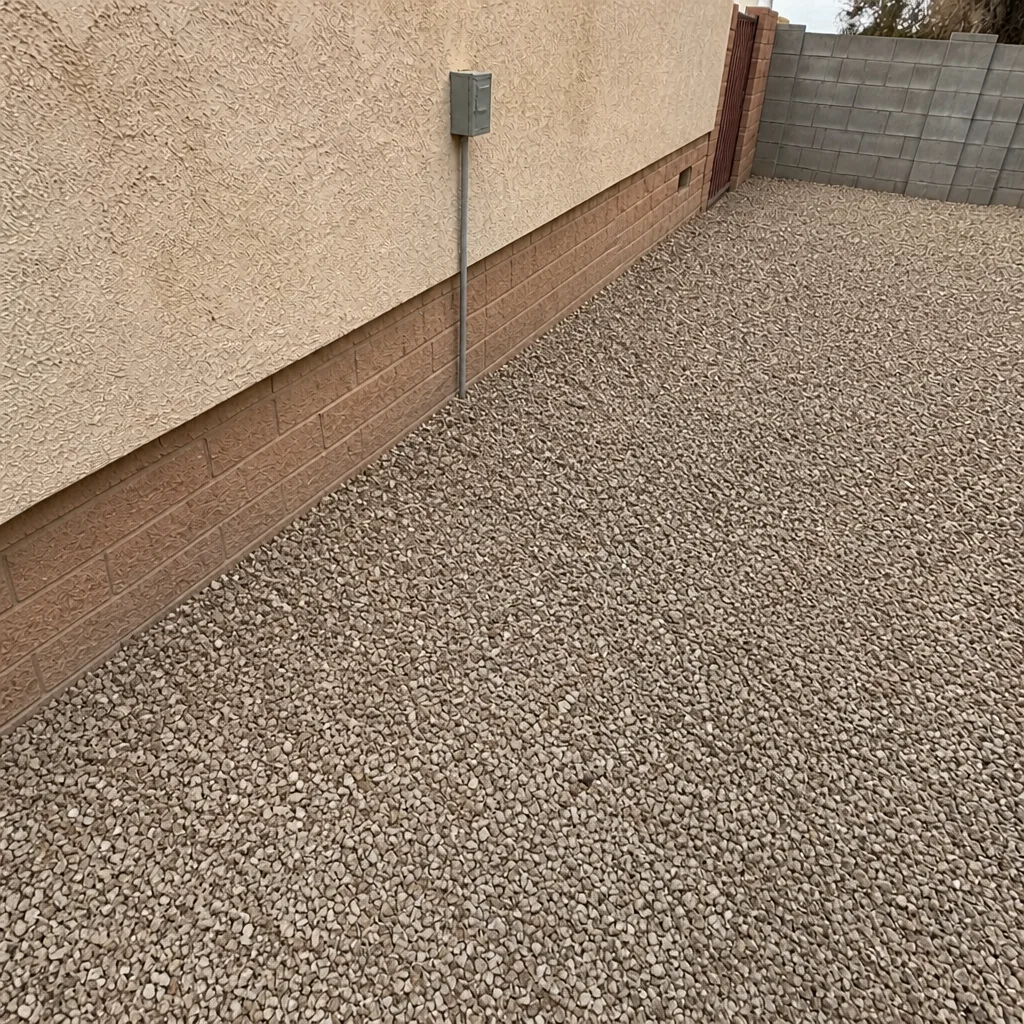 After
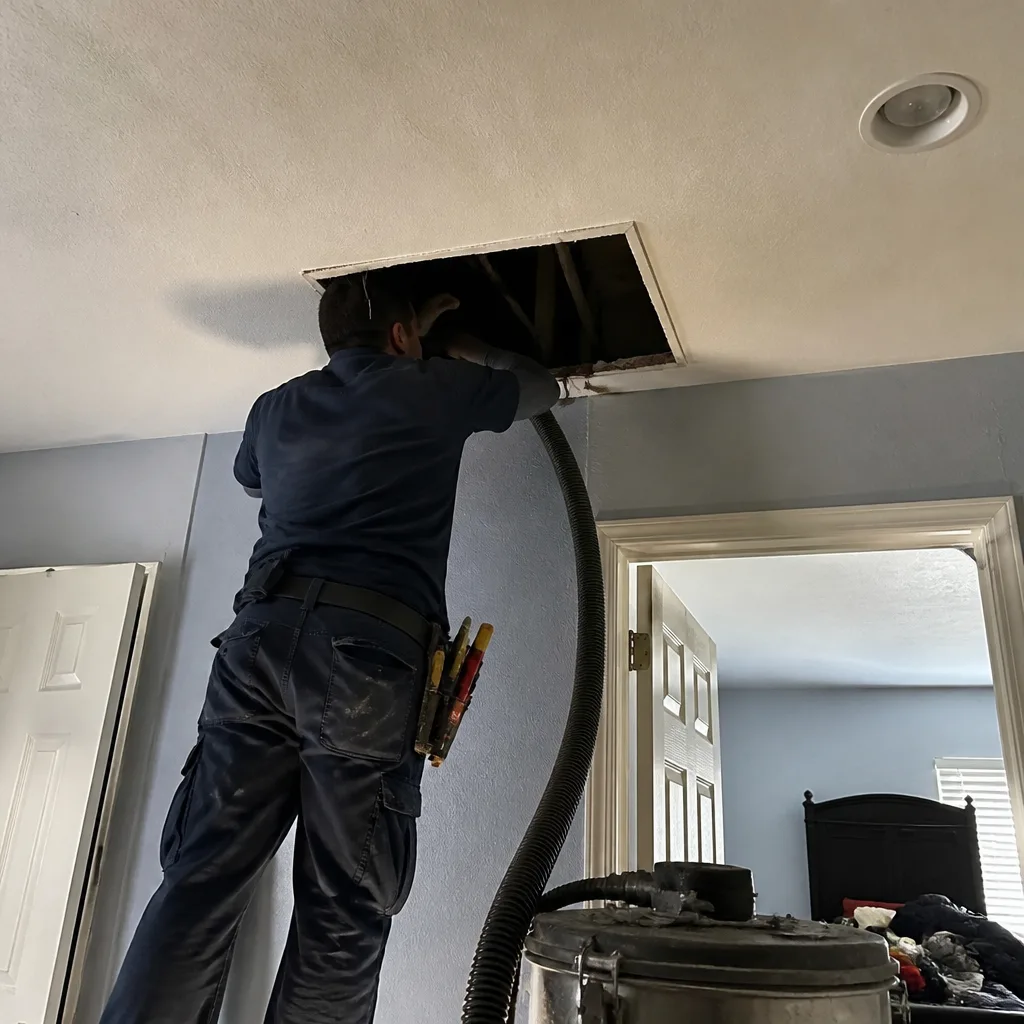 Before
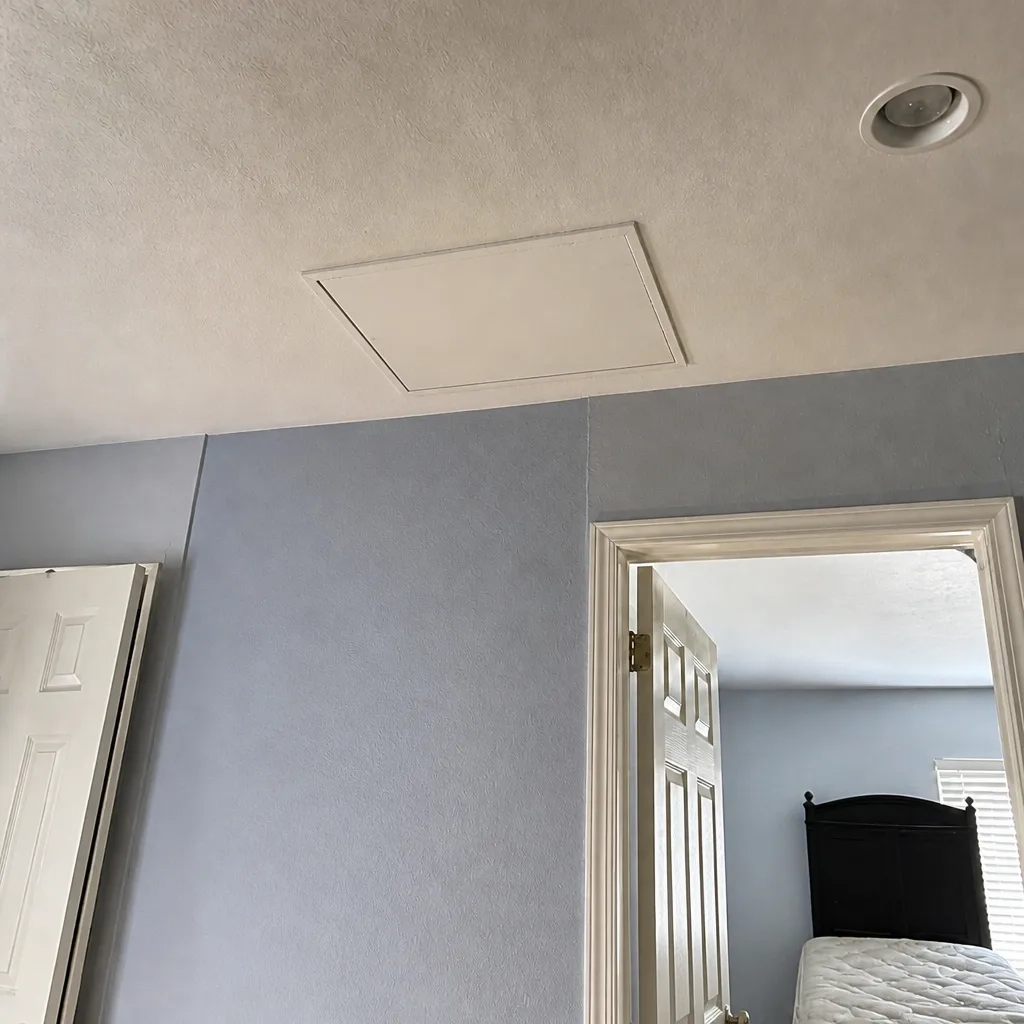 After
When to Call a Professional
Some situations call for professional attention on their own merits, not just because DIY is limited. If you’ve just finished a renovation, especially drywall or insulation work, call for an inspection. If anyone in the household has noticed increased respiratory irritation around the seasons when the system runs most, get the ducts looked at. If you’re seeing dust settle on furniture faster than usual, that’s a signal worth checking. If airflow to certain rooms has dropped, or registers whistle, the cause may be a duct problem. If the dryer vent hasn’t been cleaned in a while, don’t put it off. If the home is older and you’ve never had the ducts looked at, a baseline professional cleaning establishes where you stand and what your own maintenance can then protect.
Kingsley Air Duct Cleaning offers free estimates in Sunrise Manor. Call (844) 719-0477. We answer 24/7. Fast dispatch from 7am to 7pm, Sunday through Friday.
Frequently Asked Questions
Whole-system air duct cleaning prices in Sunrise Manor depend on system size, how many duct runs there are, how badly the ducts are loaded, and whether any repair work is needed. The reliable way to price it is a free estimate with a written, flat per-system number before work starts, not a per-vent teaser rate. Call (844) 719-0477 for an exact quote, and we’ll tell you what your system needs.
Very low quotes usually reflect a per-vent teaser price that gets raised once the crew is on site, or a crew without the negative-pressure HEPA equipment a real clean requires. There’s no way to do proper extraction in the 1,500 – 4,000 CFM range with consumer tools. Ask what equipment will be used and whether the price is flat per system. If either answer is vague, that’s your answer. Call (844) 719-0477 for a written flat estimate.
Before-and-after photographs of your own system are the honest confirmation. Ask any firm to show you the photos at the end of the job; a firm doing real work can produce them. The before-and-after photo set also protects you if you’re selling the home. If a firm can’t show evidence, ask why. Call (844) 719-0477 to book an estimate where the documentation question is answered.
Most homes go several years between professional cleanings, though Sunrise Manor homes in dusty or windy locations often need attention sooner. Triggers are usually condition, not calendar: recent renovation, visible dust settling, airflow problems, or a recent move where the prior owner’s habits are unknown. A hybrid schedule, with a professional baseline clean and disciplined homeowner maintenance between, is usually the right rhythm.
Light surface access is manageable, but cleaning a dryer vent run without seeing it end to end is a genuine risk in Sunrise Manor homes where the run isn’t a straight shot. Pushing lint deeper, or separating flex sections you can’t see, is a real hazard. Dryer vent lint is combustible. Have the vent professionally cleaned and checked. Call (844) 719-0477 for an estimate.
Yes. Sunrise Manor is part of our service area, along with the surrounding Las Vegas Valley communities. Our technicians have up to 13 years of experience working with residential and commercial air systems, using professional-grade Rotobrush and Nikro equipment. We offer air duct cleaning, dryer vent cleaning, and air duct repair. Call (844) 719-0477 for a free estimate.
The Bottom Line
The DIY vs professional question comes down to what each toolset can actually do. Surface work – register cleaning, grille washing, filter changes, visual inspection – is genuinely yours to do and worth doing well. It gives you real information about the system and extends the life of a professional cleaning. What it cannot do is move bonded debris out of trunk lines, and in a Sunrise Manor home where caliche dust plumes easily when disturbed, trying can spread contaminants into the living space. The right structure is a professional baseline clean using real negative-pressure extraction, followed by disciplined homeowner maintenance, with the dryer vent handled professionally as a safety matter. If a cleaning uncovers duct damage, you want a firm that can repair it and not just point at it. That’s the full air-system relationship, and it’s what our three services exist to provide.
Call (844) 719-0477 for a free estimate. We answer 24/7. Fast dispatch from 7am to 7pm, Sunday through Friday. One flat price per system, agreed before work starts, no per-vent pricing, and before-and-after photos of your own ducts when the job is done.
Written by the team at Kingsley Air Duct Cleaning.