
Last updated November 15, 2026
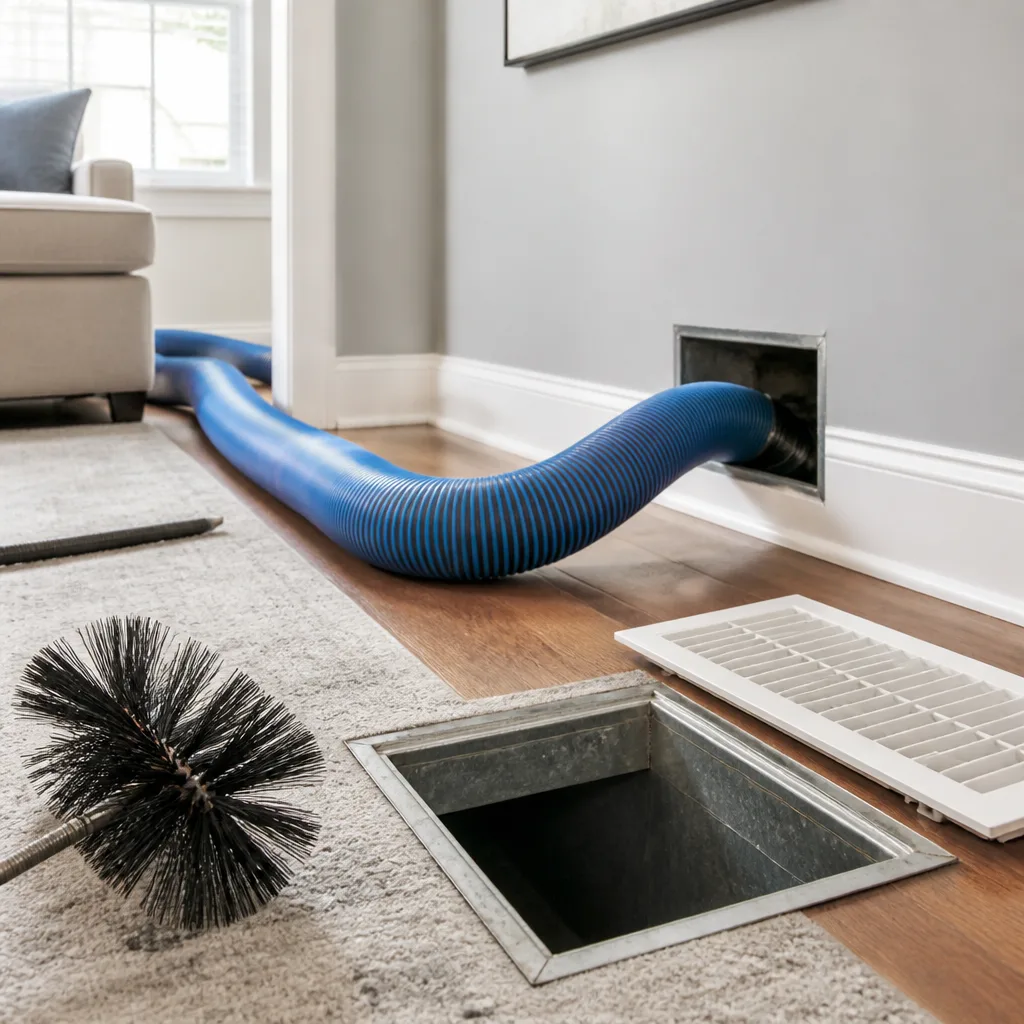 Whole-home duct cleaning
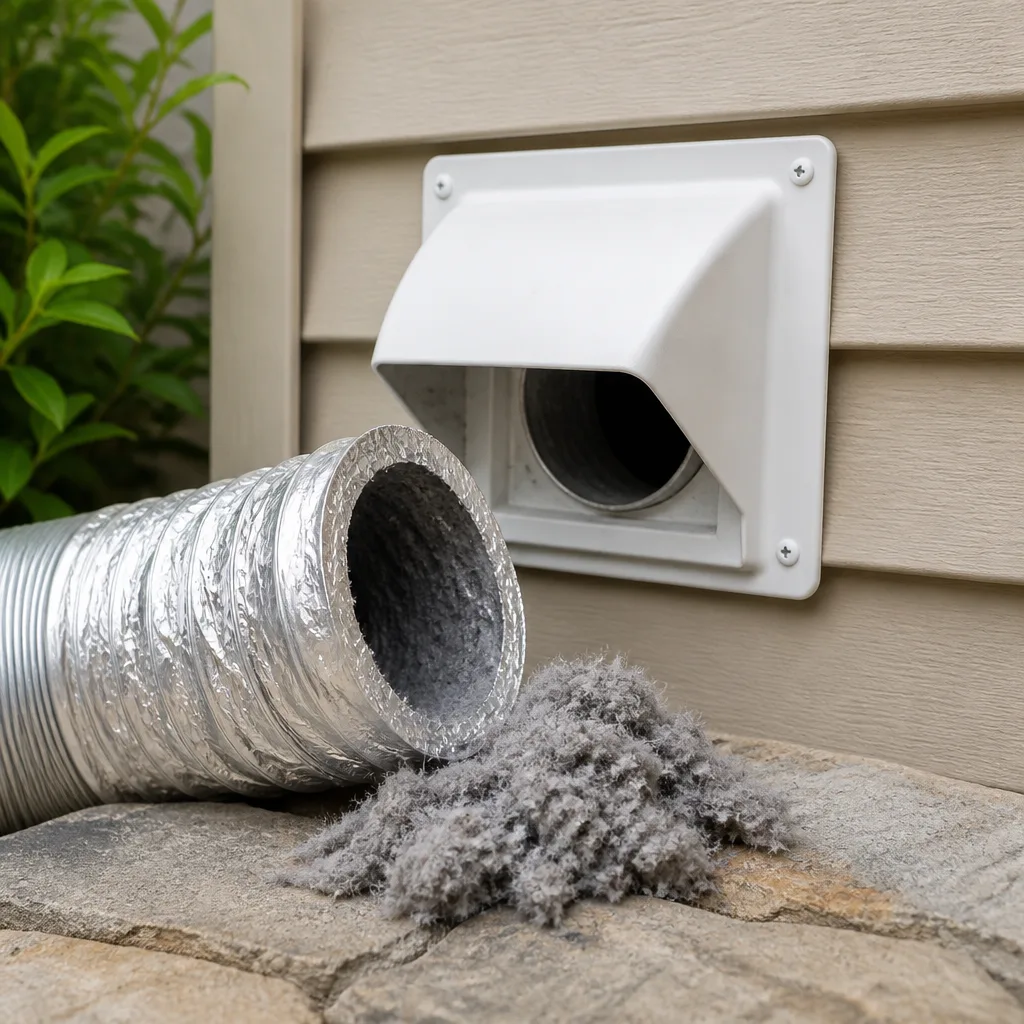 Dryer vent cleaning
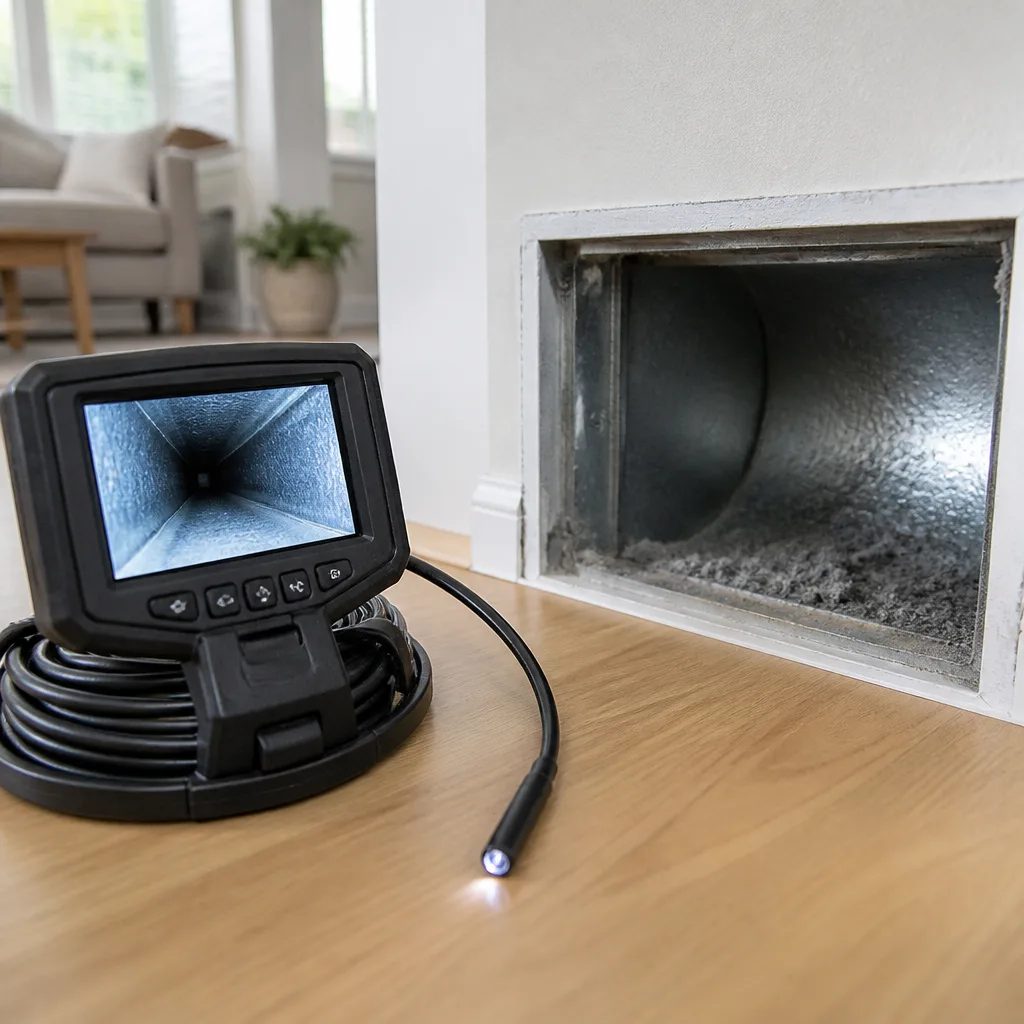 Camera inspection
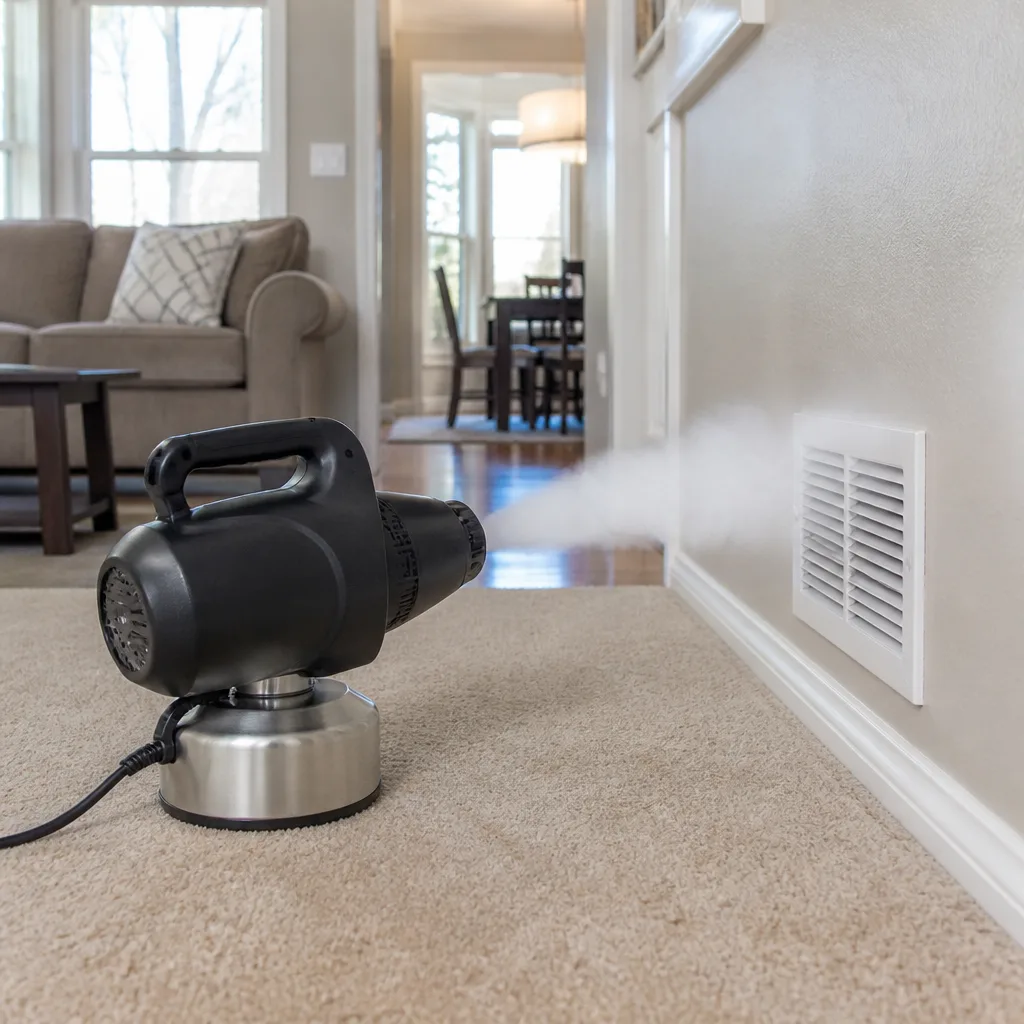 Sanitizing & deodorizing
Whole-system duct and dryer vent check with before-and-after photos - you see exactly what came out of your vents
That "$99 whole-house special" is a bait ad - the real number appears once they are in your hallway, or the "clean" is a shop-vac at the register. We photograph the inside of your ducts before and after instead.
The Complete Guide to Air Duct Cleaning in Sunrise Manor
Most homeowners here assume their ducts are cleaner than they are, because the evidence stays hidden. Desert dust doesn’t announce itself with a smell or a visible streak on the wall. It settles quietly into the same branch runs year after year, and the system keeps running because that’s what air systems do. What you’ll learn in this guide is where contamination actually collects in Sunrise Manor homes, how caliche dust behaves once it’s inside a duct, why equipment selection matters more than a low bid, and how to verify a cleaning was done correctly. We’ll also explain how to read a post-cleaning inspection report and why your HVAC efficiency depends on duct condition in a climate where the cooling season never really ends.
Styles & brands we work with
- Whole-home duct cleaning
- Dryer vent cleaning
- Camera inspection
- Sanitizing & deodorizing
Quick Answer
Air duct cleaning in Sunrise Manor is a source-removal process: a professional-grade negative-pressure vacuum, usually a Rotobrush or Nikro system, pulls the entire duct system under suction while agitation tools loosen debris from every branch, then the collected material is removed through a HEPA filtration unit. It’s worth doing when debris has accumulated heavily, after an HVAC event or renovation, or when you notice uneven airflow or visible dust at the registers. A correct job takes hours, not minutes, and ends with a written report and before-and-after photos of your own ducts.
Table of Contents
- Why Sunrise Manor Ducts Get Dirty Faster Than the National Average
- The Hot-Climate Problem: Why AC Runtime Drives Contamination
- What Sunrise Manor’s 1980s – 2000s Tract Housing Means for Your Ducts
- How Caliche Dust and Desert Particulate Behave Inside Ductwork
- What Proper Equipment Looks Like (and What to Reject)
- How a Correct Cleaning Job Actually Runs, Step by Step
- How to Read a Post-Cleaning Inspection Report
- Dryer Vent Cleaning: The Other Air Pathway in the House
- What Air Duct Cleaning Costs in Sunrise Manor
- Common Mistakes to Avoid
- When to Call a Professional
- Frequently Asked Questions
- The Bottom Line
Why Sunrise Manor Ducts Get Dirty Faster Than the National Average
National guidance says to have ducts cleaned every few years. That timeline was written with a national average in mind, and the national average doesn’t live in the Mojave Desert. Homes in Sunrise Manor run their HVAC systems for most of the calendar year. Summer alone can mean five or six months of continuous cooling cycles. Every one of those cycles pulls outdoor air through the return side and moves it through the supply branches. The more hours the system runs, the more particulate it processes, and the faster that particulate accumulates on the interior walls of your ducts.
There’s a second factor that doesn’t apply in wetter climates: the dust here doesn’t clump and stick to one spot. It arrives fine and dry, and dry particulate stays mobile. It travels farther into the system before gravity wins. That means debris in a Sunrise Manor home tends to end up in places a surface-level cleaning never reaches: the back of the plenum, the far ends of long branch runs, the inside corners of elbows, and the return chase behind the air handler.
What this looks like in practice:
- Faster visible return. Dust reappears at the registers sooner after cleaning if the source debris deeper in the system was never removed.
- Deep-seated accumulation. Dry desert debris compacts against duct walls and cures into an adhesive layer that light brushing won’t lift.
- Filter loading. A 1-inch filter in a system running most of the year loads quickly, and once it’s loaded, unfiltered dust passes downstream into the coil and the supply ducts.
For a broader look at how we approach this work in the area, see our full Sunrise Manor service overview.
The Hot-Climate Problem: Why AC Runtime Drives Contamination
In extreme-heat climates, duct condition and cooling efficiency are the same conversation. When ducts are coated with debris, the system has to work harder to move the same volume of air. Restricted airflow means longer run times, and longer run times mean more wear on the blower and more heat absorbed into the conditioned space. That’s a feedback loop: the dirtier the ducts, the harder the system works, and the faster it accumulates more debris.
Homeowners in Sunrise Manor often notice this as a vague decline rather than a single failure. Rooms at the end of the longest branch run feel warmer than the rest of the house. The system seems to run almost continuously in July. There’s more dust settling on furniture even after the house has been cleaned. None of these symptoms points to duct contamination on its own, but together they’re worth an inspection.
What a proper inspection can reveal:
- Restriction at the supply side. Dirt coating the interior of supply ducts reduces the effective cross-section for airflow.
- Coil loading downstream. An evaporator coil with debris on its surface transfers less heat, which directly affects energy use.
- Return-side dust bypass. If the filter didn’t catch it, it went downstream into the blower, the coil, and the branches.
- Leaking duct seams. In an attic that sees extreme summer heat, poorly sealed joints pull unconditioned attic air into the supply stream. That’s a load the system can’t win against.
Cleaning the ducts isn’t a substitute for checking your system’s charge or its filter setup, but on a house running its AC most of the year, duct condition is part of the efficiency picture. That’s why our air duct cleaning process starts with inspection rather than a brush.
What Sunrise Manor’s 1980s – 2000s Tract Housing Means for Your Ducts
Most of the housing stock in Sunrise Manor was built in a concentrated window: the 1980s through the early 2000s. That matters because the construction practices of a given era tend to standardize. In the tract developments here, you’ll typically find similar layouts: an air handler in a central closet or attic space, a multifold supply trunk off the plenum, branch runs of pushed-together flexible duct feeding the bedrooms, and a return that either uses the closet cavity or a dedicated chase. Original rigid sheet-metal runs exist in the older houses, but flexible duct has been retrofitted into many systems over the years.
Each of those materials accumulates contamination differently:
- Flexible duct with its spiral wire core: dust coats the spiral and collects in the valleys between wire turns. A rotary brush that’s too aggressive can tear the liner; the right tool follows the spiral without destroying it.
- Rigid sheet-metal runs: debris adheres to the seams and in the flat sections, and the sharp corners trap material where a simple pass misses it.
- Flexible elbows and compression bends: where duct is bent tightly or crushed to fit around framing, airflow slows and dust drops out.
- The plenum and return chase: often the dirtiest part of a Sunrise Manor system, because it’s the last thing a cleaning rig is aimed at and the first thing debris in the air reaches.
Where contamination concentrates most in these houses is consistent: the supply trunk immediately off the plenum, the longest branch run to the master bedroom, the return chase behind the air handler, and the register boots where the duct ends in the wall. If you’re replacing a system or planning a renovation, a cleaning and inspection before and after is worth discussing with us. The point is to know the layout specifics of your own home, not to generalize about the neighborhood.
How Caliche Dust and Desert Particulate Behave Inside Ductwork
The dust here isn’t like the dust in a humid climate, and treating it the same way is where a lot of cleaning work falls short. In wetter parts of the country, dust arrives with moisture. It clumps, it sticks to the first surface it contacts, and it usually stays where it lands. Caliche dust and windblown desert particulate arrive dry. They’re finer in particle size, more mobile, and they stay airborne longer. Inside a duct, that means they do three things that humid-climate debris doesn’t:
- They travel farther. Dry, fine particulate stays suspended longer and settles deep into a branch run rather than accumulating near the source.
- They cling electrostatically. Dry dust builds a static charge, and the plastic-lined walls of flexible duct hold it. It coats evenly rather than settling in piles.
- They bond under pressure. Once they’re pressed against the duct wall by system airflow and the occasional humidity swing, they form a thin compacted layer that won’t come loose with a light touch.
What this means for equipment selection: soft brushing and shop vacuums barely disturb caliche dust that has bonded to a duct wall. What works is a system that combines negative pressure on the whole system with rotary agitation that physically breaks the bond, then traps the loosened material in a HEPA filter rather than blowing it back into the living space. That’s the reason the professional-grade machinery matters here more than in a wetter climate: the debris is harder to dislodge and easier to aerosolize the moment you disturb it.
The fine-particle issue also has an indoor-air quality consequence. When dry particulate is disturbed without containment, it goes airborne and the homeowner ends up with more dust in the house than before the technician arrived. Anyone who has watched a shop vac get rolled into a house for a “duct cleaning” knows how that ends.
What Proper Equipment Looks Like (and What to Reject)
This is the part of the decision most homeowners can’t easily verify, so here’s what to look for. A correct setup has three parts: a vacuum powerful enough to hold the whole system under negative pressure, a filtration unit that keeps the collected debris out of the air, and agitation tools designed for duct interiors rather than shop use. Consumer-grade shop vacuums don’t belong on the list. They don’t generate enough vacuum to pull from a closed system, they don’t have HEPA filtration, and they aerosolize the debris they’re supposed to be removing.
What to check before you hire:
- Is the vacuum a professional-grade unit? Ask what they run. Rotobrush and Nikro are the two systems most established duct-cleaning contractors use, and both are built for residential duct interiors with HEPA containment.
- Is there a separate HEPA filtration stage? Negative pressure is half the job. The other half is trapping what’s pulled.
- Are the agitation tools duct-specific? Rotary brushes, air whips, or pneumatically driven tools sized for different duct materials, not a shop-vac hose and a hand brush.
- Are there brushes for both flexible and rigid duct? A tool that works on sheet metal can tear flexible duct liner, and a tool for flex doesn’t clean sheet metal corners.
- Will they show you before-and-after photos of your own ducts? Not stock images. Your ducts.
At Kingsley Air Duct Cleaning we run Rotobrush and Nikro systems on every job, and we’re familiar with the filtration, humidity, and contaminant-removal hardware that comes from Honeywell, Aprilaire, Abatement Technologies, and Guardsman. That’s the same equipment family restoration and abatement contractors use, and it’s the baseline you should expect from anyone quoting you a duct cleaning in Sunrise Manor. If a company can’t tell you what equipment they’ll use, that’s the answer.
Cleaning is only part of the scope. If the inspection uncovers crushed flex, disconnected joints, or a torn liner, a clean-only vendor will tell you they can’t help. Our air duct work covers repair as well as cleaning, so you don’t have to call a second contractor for what the first one found.
How a Correct Cleaning Job Actually Runs, Step by Step
A proper cleaning is a sequence, not a single step. Here’s what it should look like in a Sunrise Manor home, and what each stage is for:
- Inspection and layout mapping. Before anything connects, the technician checks the system layout, the register locations, the return setup, and the air handler. Any pre-existing damage gets photographed and logged.
- Setup and containment. The negative-pressure vacuum and HEPA filtration unit connect at a strategic point, usually the main trunk or an access cut. The goal is to pull the whole branching system toward the collection point.
- Return and plenum cleaning. The return chase and plenum come first, because they’re the highest-contamination zone in most systems.
- Supply branch agitation. The technician works branch by branch with rotary brushes or air tools sized to each duct material, pulling loosened debris back toward the vacuum.
- Register boot and grille cleaning. The boots that connect the duct to the wall opening and the grilles themselves hold material and get cleaned at the end.
- Air handler cabinet wipe-down. The blower, coil compartment, and cabinet surfaces get cleaned and photographed.
- Post-cleaning inspection and report. A second inspection confirms the result. Before-and-after photos and a written report go to the homeowner before the equipment leaves the property.
Two things make the process work. One is that the negative pressure is maintained throughout, so nothing that gets loosened re-settles downstream. The other is that the agitation is controlled. Desert dust needs aggressive enough tools to break the bond, but not so aggressive that flexible duct liner gets damaged. That balance is what the equipment specificity is for.
How to Read a Post-Cleaning Inspection Report
A completed inspection report is the only durable evidence you’ll have that the work was done, so it’s worth knowing what a real one contains. Here’s what to check:
- Photos of your own ducts, labeled by location. Before and after, with the branch run identified. A photo that could belong to any house is worth nothing.
- A list of access points. Where the technician cut, where joints were opened, and how they were resealed after the work.
- A summary of what was found. The report should say what conditions were encountered: heavy debris in specific branches, a damaged section of flex, a leaking joint, a loaded coil.
- Repairs or recommendations flagged. If a crushed duct was found and repaired, that should appear. If something was recommended and not done, that should appear too.
- A flat total for the system. Not a per-vent price. A single price for the whole job, agreed before the work started.
What a report should not contain: conclusions you can’t verify, claims about your health, or unexplained charges. If the invoice doesn’t match the written estimate, that’s a problem. The written estimate sets the final price, and if it doesn’t, the job wasn’t quoted correctly in the first place.
Dryer Vent Cleaning: The Other Air Pathway in the House
Most people think of duct cleaning as an HVAC concern. In a Sunrise Manor house, the dryer vent is the other air pathway that deserves professional attention, and it’s a safety issue rather than a comfort one. Lint accumulates in the vent line, and when it reaches the dryer’s heating element, it’s highly combustible. The same desert dust that coats your supply ducts also finds its way into the dryer vent, and the combination of lint and dry particulate is not one to ignore.
Signs the vent line needs cleaning:
- Clothes take more than one cycle to dry.
- The dryer exterior feels hot to the touch while running.
- There’s a burning smell or a lint smell in the laundry area.
- The vent flap outside doesn’t open fully when the dryer runs.
- It’s been more than a year since the vent line was last cleaned.
Dryer vent cleaning is part of the three-service scope we offer, and it’s a discrete job rather than an add-on afterthought. If you’re already having the ducts cleaned, we can look at the vent line at the same time. For a standalone appointment, see our dryer vent cleaning page.
What Air Duct Cleaning Costs in Sunrise Manor
Pricing varies by system size, number of branches, accessibility, and how much debris has accumulated, so there’s no honest single number. What we will tell you is how the pricing model should work: one flat price for the whole system, agreed before the technician starts, based on a walk-through and a written estimate. If the estimate says one number and the invoice says another, walk away.
Here’s what to expect in Sunrise Manor:
- Whole-system cleaning: quoted per system based on layout and branch count, not per vent. A typical three-bedroom tract home has a predictable branch count and that gets priced as a single job.
- Inspection report and before-and-after photos: included in the cleaning price. Not a separate line item.
- Air duct repair: priced separately from cleaning once the inspection identifies what needs work. If there’s no damage, there’s no repair line item.
- Dryer vent cleaning: a standalone service with its own price. If done alongside the duct cleaning, ask for a combined estimate rather than booking separately.
The honest answer on why quotes vary so widely is equipment. A proper HEPA negative-pressure rig, rotary agitation tools for both flex and sheet metal, and a crew trained on both is expensive. A shop vac, a hose, and a brush is cheap. The two get quoted at very different prices, and the cheaper one often leaves more debris behind than it removes. A low bid usually buys a one-hour visit, a superficial pass, and a story. Call (844) 719-0477 and we’ll set up a free estimate on your system so you’re comparing written prices for real work.
Common Mistakes to Avoid
- Hiring on price alone without equipment specifics. The lowest bid in Sunrise Manor is usually the one running consumer-grade vacuums. Ask what machine they’ll bring before you book.
- Accepting a per-vent price. Per-vent pricing rewards the contractor for a fast pass and leaves you guessing about the plenum and return chase. Whole-system, flat price, agreed in advance.
- Skipping the return and plenum. In desert tract housing, the return chase is often the dirtiest zone. A cleaning that only touches the supplies and registers misses the source.
- Letting a soft brush loose on caliche dust. Desert particulate bonds to duct walls. A light pass with a hand brush might polish the surface and leave the contamination.
- Not asking for photos of your own ducts. A generic before-and-after from a brochure tells you nothing. Ask for photos labeled by branch run and register location.
- Ignoring a crushed or disconnected flex run. Once the inspection finds it, it’s a repair decision. If the vendor can’t repair, that’s a second contractor and a second service call.
- Forgetting the dryer vent in a house that runs AC all year. The same dry dust finds the dryer line. Lint plus dry particulate in a hot vent line is a fire risk, not a tidiness concern.
When to Call a Professional
You’ll know it’s time when you notice more than one of these at once. Dust settling on furniture within days of cleaning. Rooms at the end of the longest supply run that never cool properly in summer. A noticeable musty or dusty smell each time the system starts. Visible debris at the registers, or a dust puff when the blower kicks on. A recent HVAC replacement or blower or coil repair. A renovation that generated dust while the system was running. A home you just moved into with no service history. These are the situations where an inspection is worth the call, and cleaning decisions should come after the inspection rather than before it.
Kingsley Air Duct Cleaning offers free estimates in Sunrise Manor. Call (844) 719-0477. We answer 24/7. Fast dispatch from 7am to 7pm, Sunday through Friday. Our technicians have up to 13 years of experience, we run Rotobrush and Nikro professional-grade systems on every job, and we offer one flat price per system agreed before work starts. If the inspection finds damage, we handle the repair as well as the cleaning. Find out more about Kingsley Air Duct Cleaning and what we do.
Frequently Asked Questions
There’s no single price, because it depends on the number of branches, the layout, accessibility, and how much debris has accumulated. What matters more than the number is the structure: one flat price per system, written down before the technician starts, with no per-vent pricing and no surprise line items on the invoice. Call (844) 719-0477 for an exact free estimate on your system.
Usually it’s equipment. A quote that’s a fraction of the others is usually based on a shop vac and a hand brush, which can’t hold a system under negative pressure, can’t trap fine particulate, and often leaves debris behind. A proper job uses a professional-grade vacuum with HEPA filtration and duct-specific rotary agitation. Ask what machine will be on site before you book. Call (844) 719-0477 and we’ll tell you exactly what we’ll bring to your house.
Ask for before-and-after photos of your own ducts, labeled by branch run, plus a written inspection report that lists access points, findings, and repairs. Verify that the invoice matches the written estimate. If any of that is missing, the job doesn’t count. We include the report and photos as part of every cleaning. Call (844) 719-0477 to schedule.
There’s no fixed interval. Homes here run their HVAC systems most of the year, so ducts accumulate debris faster than in climates with shorter cooling seasons. An inspection every couple of years is a reasonable starting point, and cleaning is worth doing when the inspection shows heavy accumulation or after an HVAC event, renovation, or a move into a house with no service history. Call (844) 719-0477 for a free estimate.
Clean ducts reduce airflow restriction, which lets the system move the air it was designed to move without working harder. In a Sunrise Manor house running its AC most of the year, that reduction in load matters more than it would in a colder climate. Duct cleaning isn’t a replacement for checking refrigerant charge or filter setup, but duct condition is part of the picture. Call (844) 719-0477 to book an inspection.
We repair it. That’s the difference between a full-scope duct company and a cleaning-only vendor. Crushed flex, disconnected joints, torn liners, and leaking seams are common findings in Sunrise Manor’s tract housing, and they’re resolved as part of the same relationship rather than sent out to a second contractor. Call (844) 719-0477 and we’ll inspect and quote in one visit.
The Bottom Line
Duct cleaning in Sunrise Manor isn’t the same job it is elsewhere. Dry desert particulate, near-continuous HVAC runtime, and the specific layout of the local tract housing produce a set of contamination patterns that a national checklist doesn’t account for. Clean the whole system, not just the registers. Expect the return and plenum to be the dirtiest part. Insist on professional-grade equipment with HEPA containment and duct-specific agitation tools. Ask for before-and-after photos and a written report. Agree on a flat price before work starts. And treat the dryer vent as a safety item, not a cosmetic one. If the inspection turns up damage, have it repaired by the same company that cleaned. That’s the whole method, and it’s how to get the job done right.
Call (844) 719-0477 for a free estimate. We answer 24/7. Fast dispatch from 7am to 7pm, Sunday through Friday.
Written by the team at Kingsley Air Duct Cleaning.
See the difference
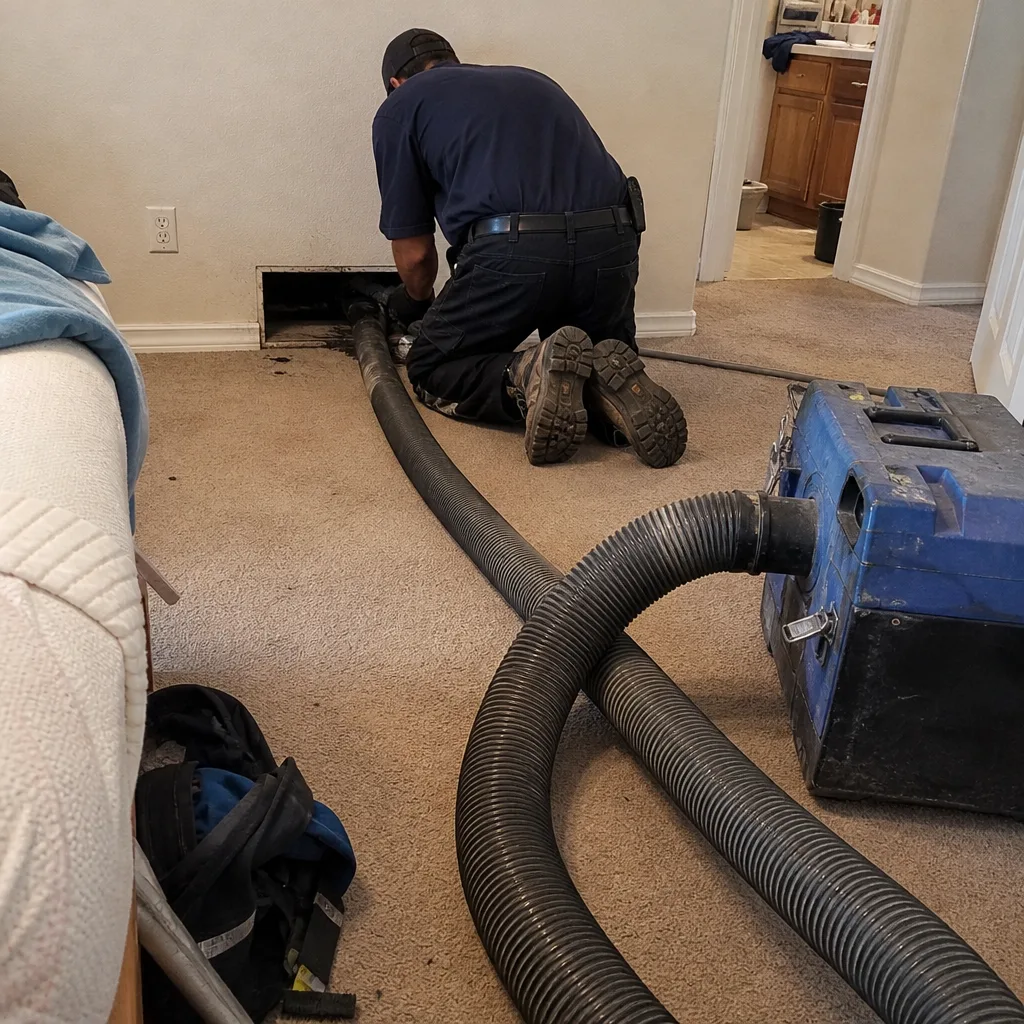 Before
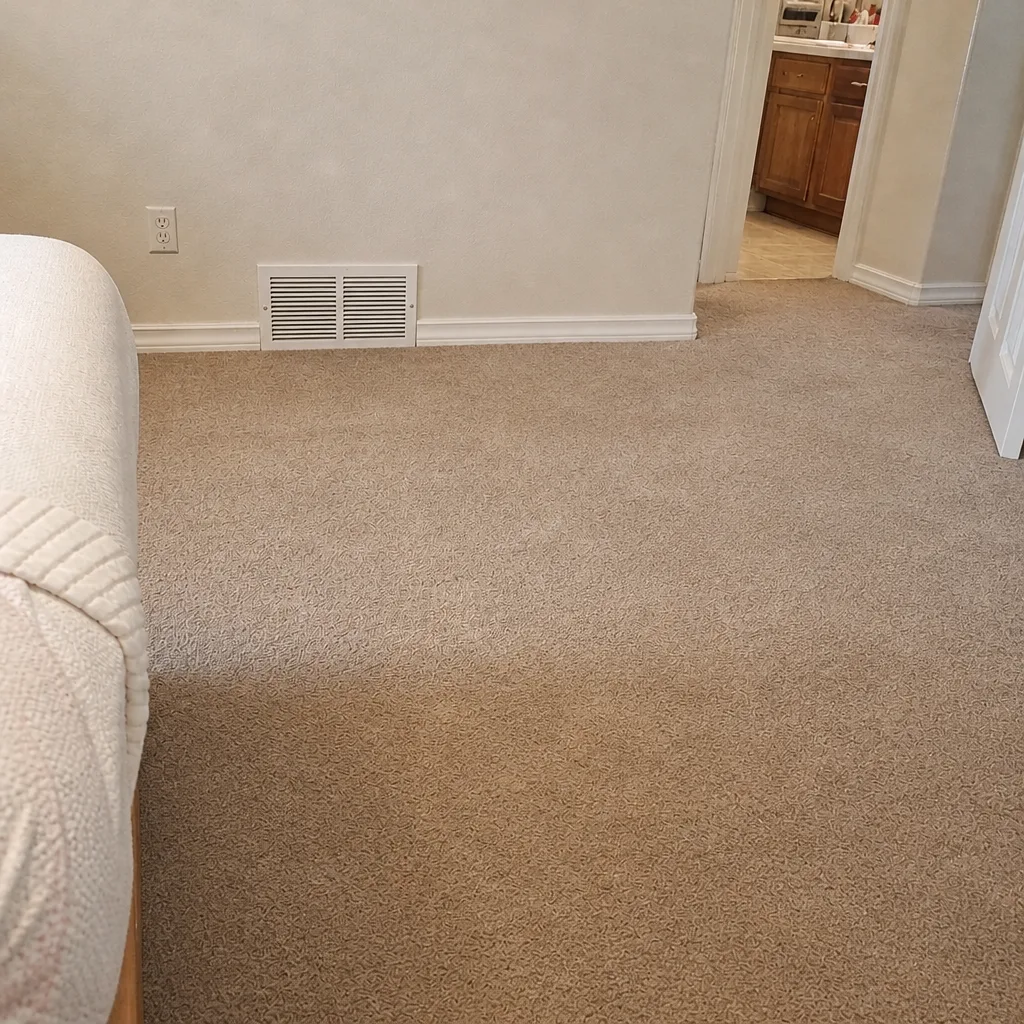 After
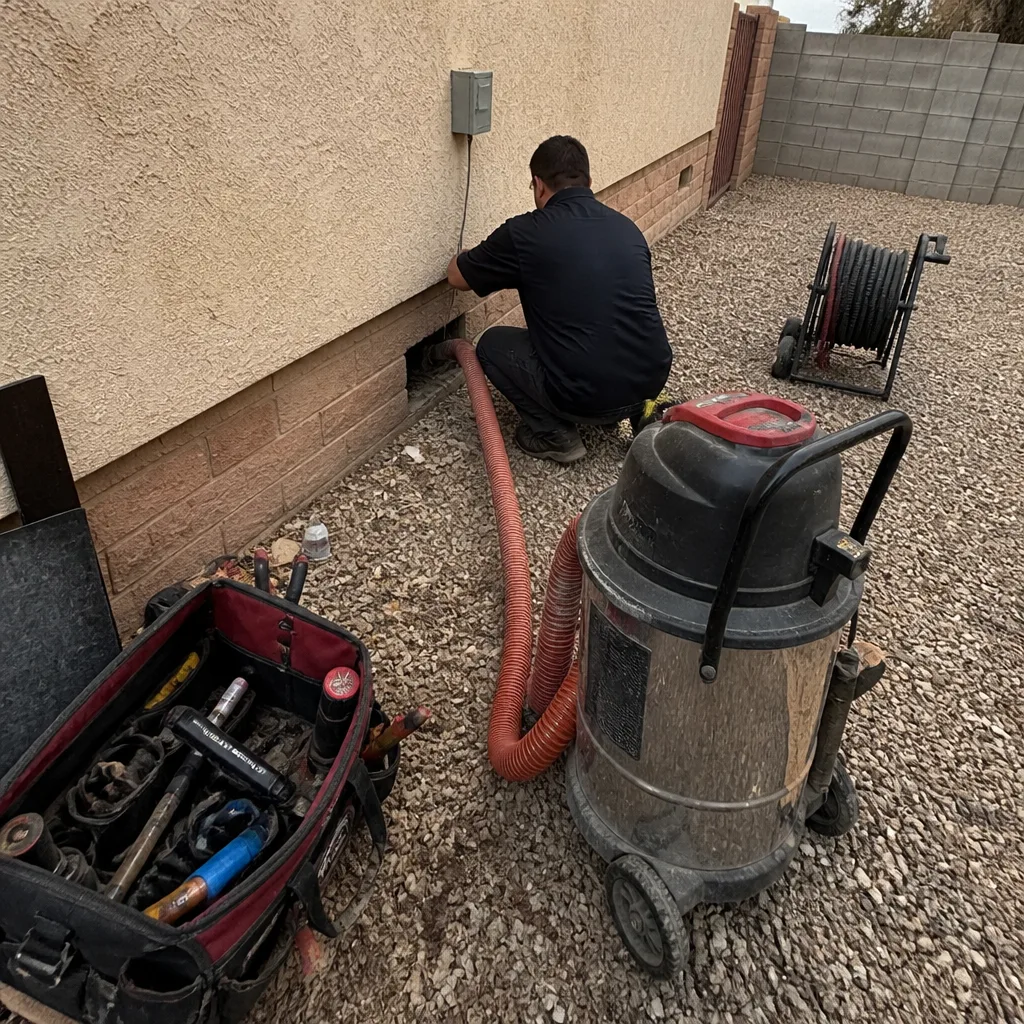 Before
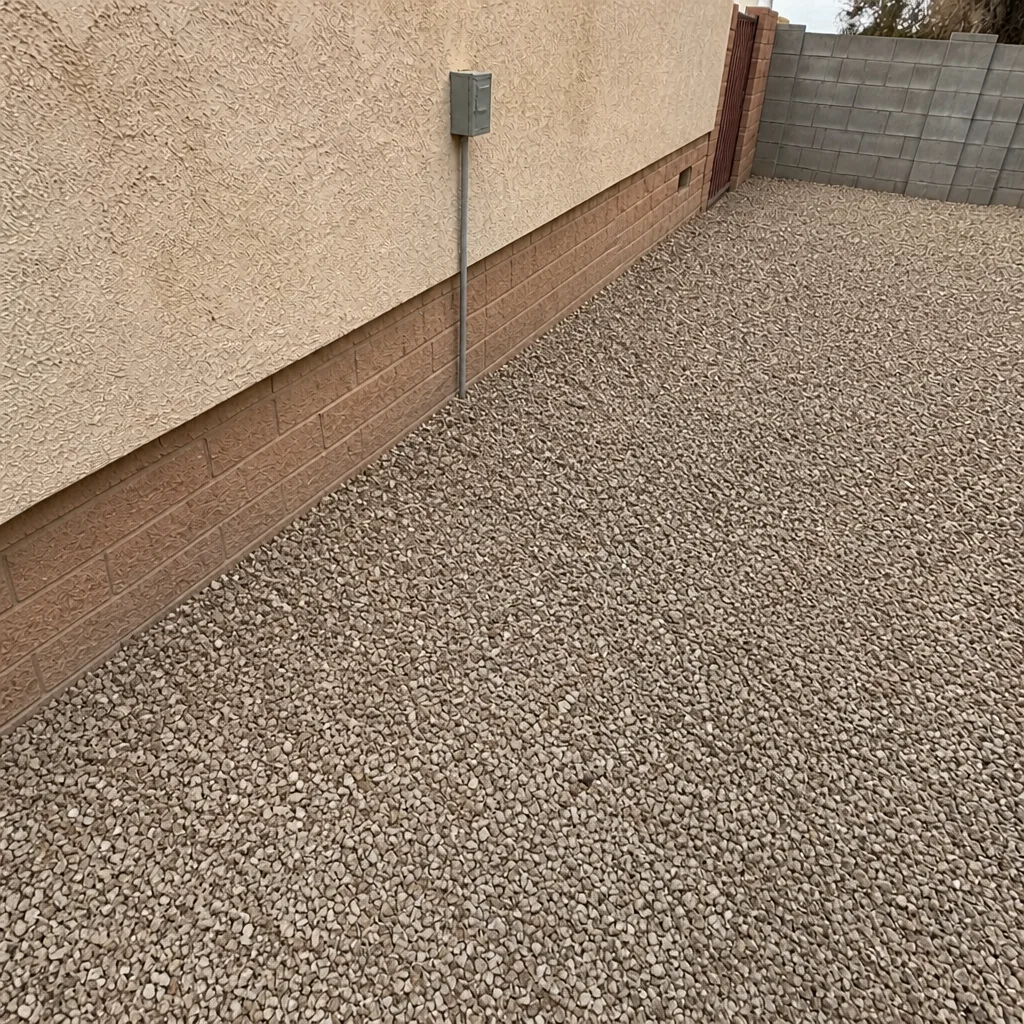 After
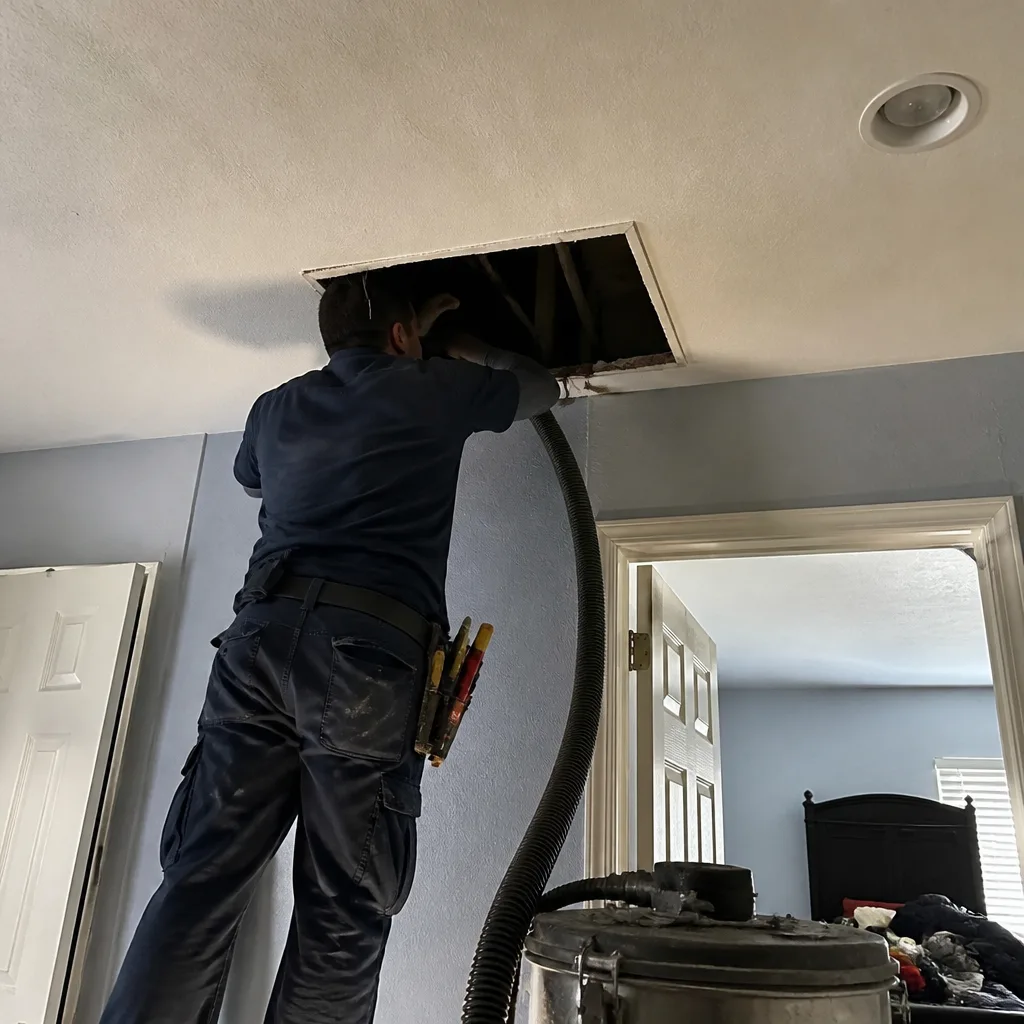 Before
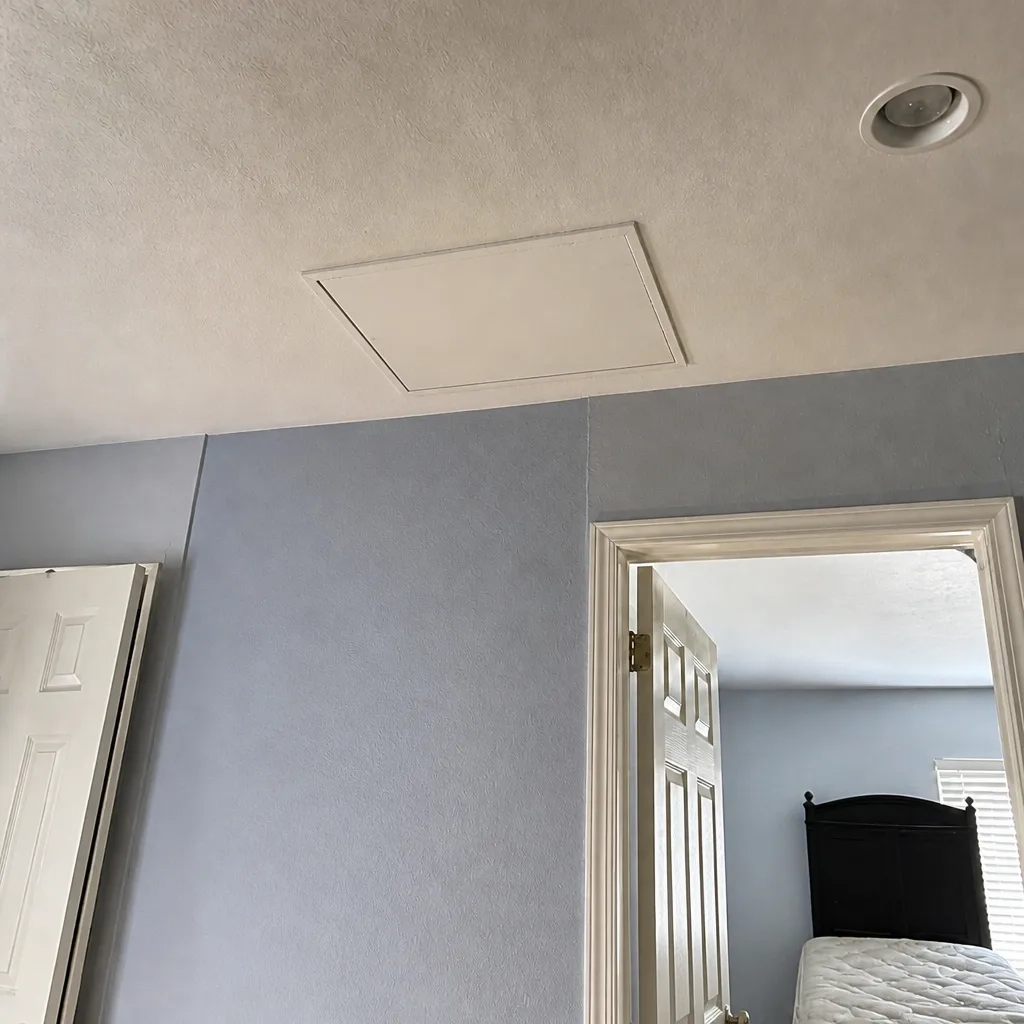 After