
Last updated November 15, 2026
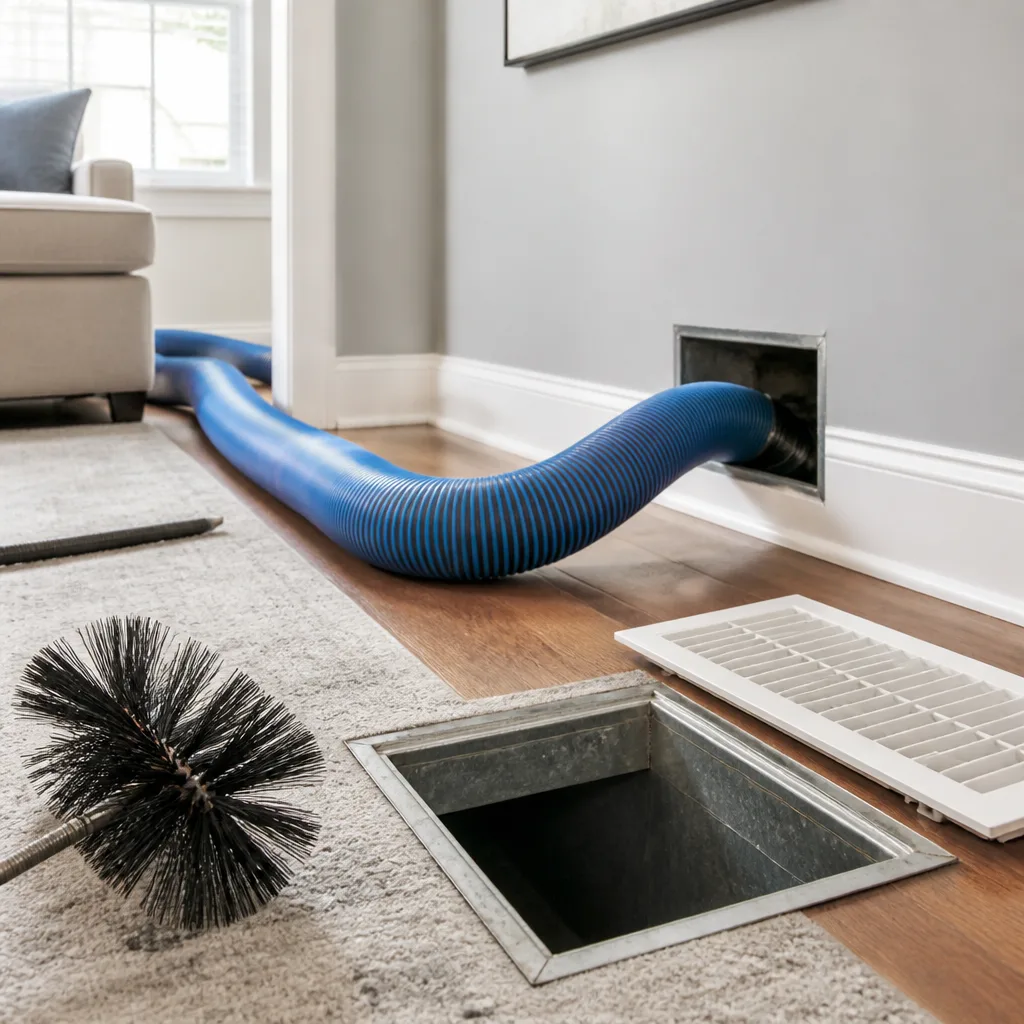 Whole-home duct cleaning
 Dryer vent cleaning
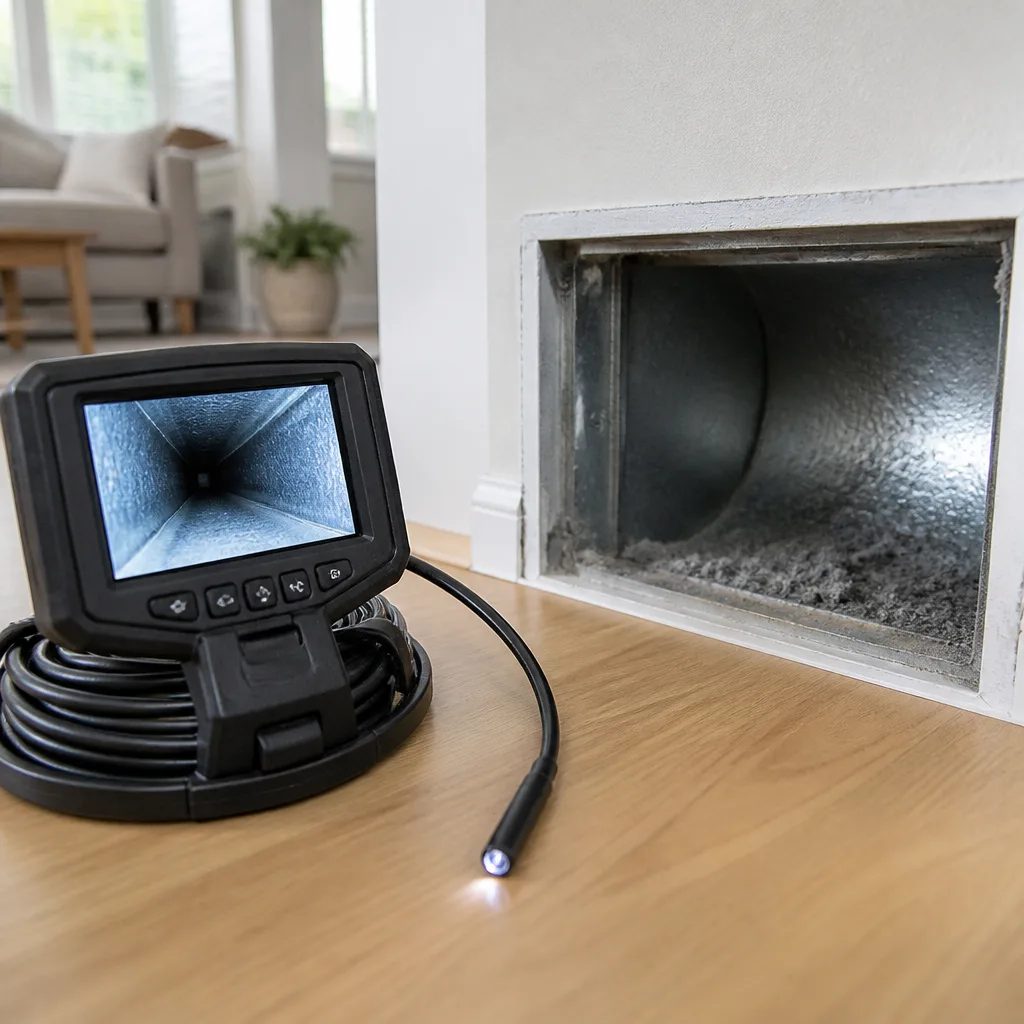 Camera inspection
 Sanitizing & deodorizing
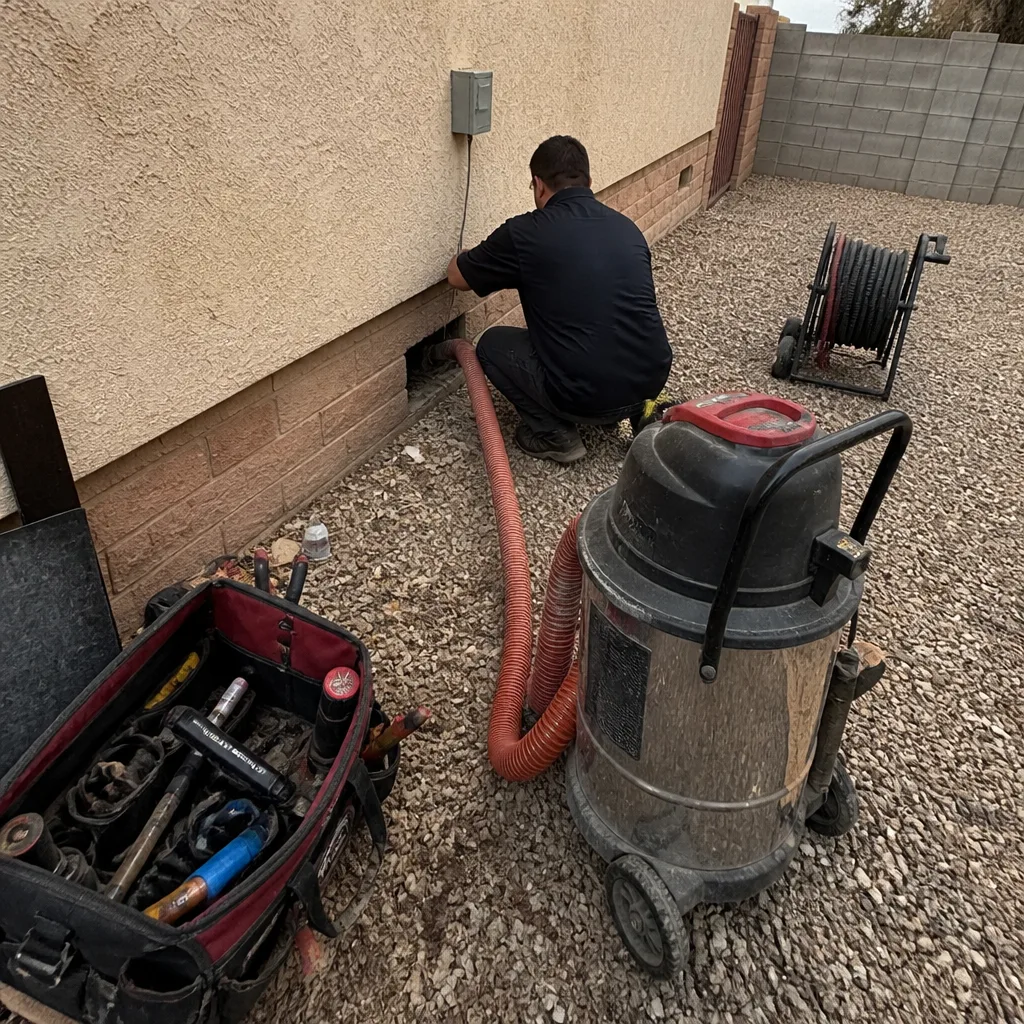
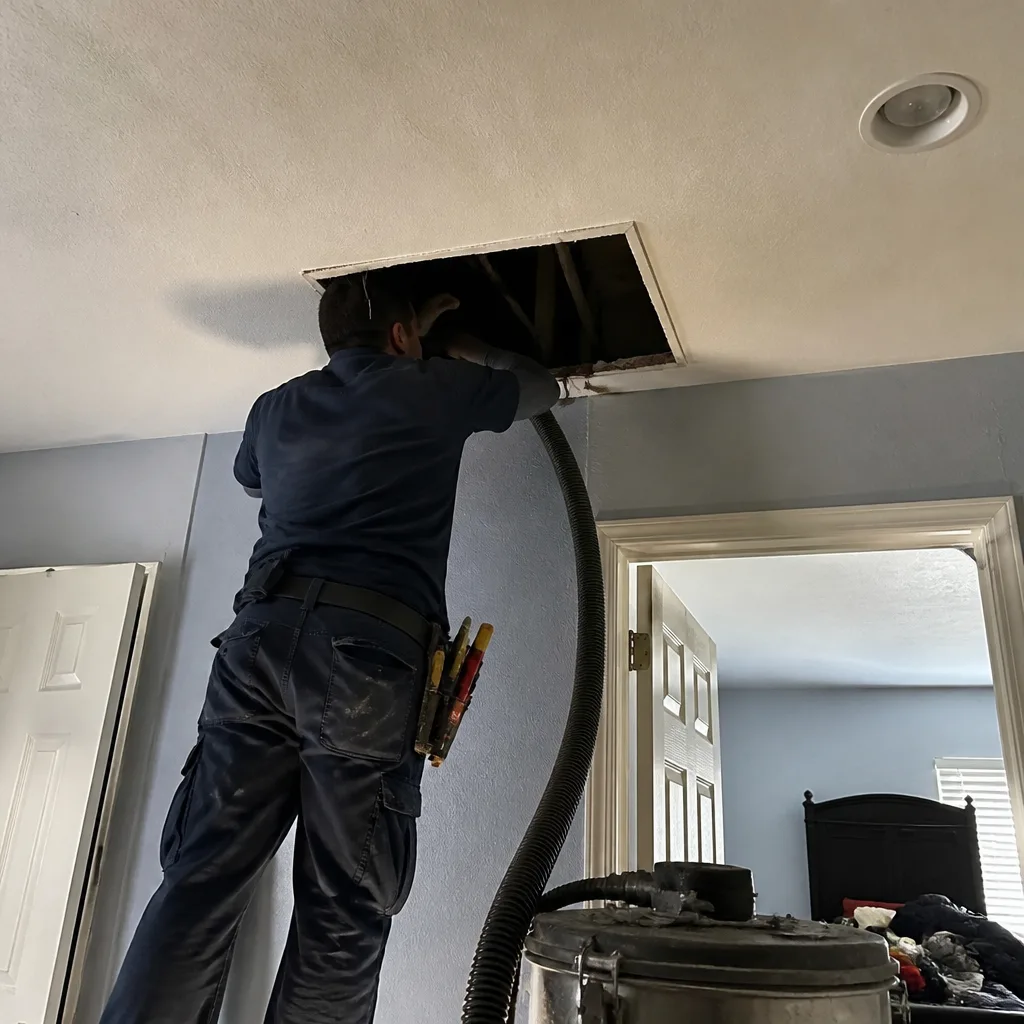
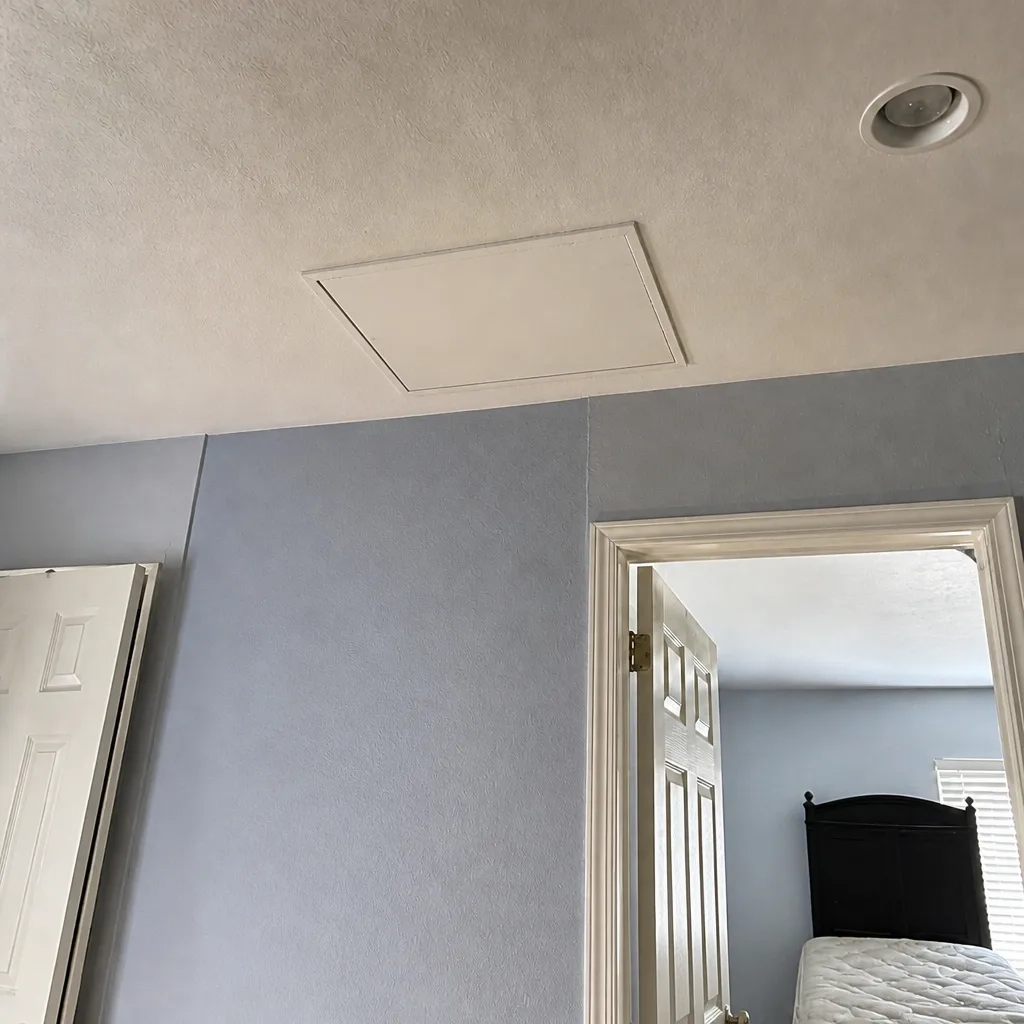
Whole-system duct and dryer vent check with before-and-after photos - you see exactly what came out of your vents
That "$99 whole-house special" is a bait ad - the real number appears once they are in your hallway, or the "clean" is a shop-vac at the register. We photograph the inside of your ducts before and after instead.
Seasonal Air Duct Cleaning Care for Sunrise Manor: Year-Round Homeowner’s Guide
If you moved to Sunrise Manor from the Midwest, you probably brought a seasonal maintenance calendar with you: deep clean in spring, check again in fall. That calendar doesn’t survive contact with the Mojave. Spring and fall here can each collapse into a two-week window, and the cooling system runs under near-continuous load from May into October. The useful framework isn’t the calendar on your wall. It’s your HVAC’s workload cycle. This guide walks through what matters at each stress point, from pre-summer inspection to winter gas-heat safety, and how to time professional work around those points instead of an arbitrary annual date.
Quick Answer
For most Sunrise Manor homes, the highest-value duct cleaning window is March into April, before the system shifts into peak cooling load, with a second assessment in October after the cooling season ends. A full professional cleaning roughly every two to three years fits most households, moved earlier if you’ve had remodeling dust, a filter failure, or a recent HVAC repair. What matters more than the date on the calendar is catching duct degradation before it’s driving your energy bill.
Styles & brands we work with
- Whole-home duct cleaning
- Dryer vent cleaning
- Camera inspection
- Sanitizing & deodorizing
Table of Contents
- Why a Standard Seasonal Calendar Fails in Sunrise Manor
- Pre-Summer Prep (March-April): The Highest-Stakes Window
- Mid-Summer Monitoring: What to Track During Peak Load
- Post-Summer Assessment (October): Reading Duct Wear
- Winter Heating Prep: Combustion Safety in a Dusty Cold Season
- How to Time Professional Cleaning Around Stress Points
- What a Proper Duct Inspection Should Include
- One Contractor, Cleaning and Repair
Why a Standard Seasonal Calendar Fails in Sunrise Manor
Sunrise Manor sits in the Las Vegas Valley’s eastern edge, where summer temperatures regularly push past 110°F and the cooling system effectively runs from April through October without a real break. In a four-season climate, “spring cleaning” is a polite suggestion for a system that just came off light duty. Here, the same recommendation lands before the hardest six months of the year. That inversion is why general seasonal advice so often misses the mark for Sunrise Manor homeowners.
The dust load matters just as much as the heat. The valley floor generates fine particulate dust that gets pulled into return air every time the system cycles, and a home near open desert edge or an unpaved lot sees more of it than a home in a landscaped subdivision. That dust doesn’t just coat visible vent covers. It settles on the evaporator coil face, loads the blower wheel, and accumulates inside flex duct runs where no amount of vacuuming living space will reach it.
We’ve seen this pattern repeatedly across Sunrise Manor: a homeowner follows the spring/fall habit, cleans the ducts in the fall, and by the following July the system is short-cycling on a partially blocked coil. The calendar wasn’t wrong so much as misaligned with when the load actually arrives. The fix is straightforward – anchor your maintenance to the system’s real stress points.
What “Stress Point” Means in Practice
A stress point is any moment the system works hardest or transitions between modes: the first sustained week above 100°F, the switch from cooling to heat, or a major renovation that introduces construction debris. Cleaning before a stress point protects the coil and blower from the worst of the load. Cleaning after protects the system from the residue the stress period deposited.
Pre-Summer Prep (March-April): The Highest-Stakes Window
March and April are the most important months on the Sunrise Manor duct-care calendar, and most homeowners treat them as an afterthought. These weeks are when you can still run the system through a full inspection cycle with access to the attic or crawl space before the thermal environment becomes uncomfortable for technicians and marginal for the equipment. Once daytime highs settle above 100°F, inspection windows tighten and any repair discovered mid-summer has to happen under real load.
Here’s what a pre-summer duct inspection should cover, in order:
- Return and supply register airflow. A handheld anemometer reading at each register tells you whether airflow is even or whether one branch is starved. Uneven flow is a duct-design or leakage signal, not a filter signal.
- Filter fit and MERV rating. The filter must be seated flush, no gapping at the frame. A filter that’s too restrictive for the blower’s static pressure rating will cut airflow and accelerate coil frosting.
- Coil and blower inspection. Visual inspection of the evaporator coil face and blower wheel through the access panel. A visibly dust-loaded coil loses capacity you’ll pay for in July.
- Flex duct condition in the attic. Look for crushed or kinked runs, disconnected collars, and duct that’s sagged off its supports. The attic in Sunrise Manor reaches extreme temperatures, and flex duct exposed to that heat plus UV from a roof leak will degrade faster than in cooler climates.
- Filter grille and return plenum. Return-side dust accumulates faster than supply-side dust in this climate. Return plenum cleaning is often the most neglected part of a “duct cleaning” job.
- Filter replacement. Fresh filter starts the season with a clean baseline and gives you a reference point for mid-summer checks.
If your inspection turns up crushed flex duct or a disconnected collar, that’s a repair, not a cleaning. This is exactly why we keep air duct repair capability in-house – we don’t want to hand you off to a second contractor after the inspection exposes a problem. Our technicians have up to 13 years of experience and use Rotobrush and Nikro equipment on every cleaning job.
Why the March-April Window Is Worth Protecting
The system is transitioning from heating (if used at all) to cooling. That transition week is your last clean shot at the coil, blower, and duct interior before the cooling season loads them again. Any dust you remove in April doesn’t get baked onto the coil in May and June.
Mid-Summer Monitoring: What to Track During Peak Load
Once the system is running 10 to 14 hours a day through July and August, you can’t do much cleaning inside the ductwork mid-season. What you can do is watch for the early signals of duct performance degradation, and act on them at the next available opening. Here’s what’s worth tracking, week to week:
- Supply register air temperature versus return. A cheap stick thermometer at a supply register should show a temperature drop of roughly 15 to 20 degrees below the return in a properly working system. If the delta shrinks over the season, the coil is loading up or airflow is dropping.
- Runtime and cycle behavior. If the system starts cycling shorter than it did in June, or won’t hold temperature through the hottest part of the afternoon, that’s a signal worth logging.
- Visible dust at the registers. Fresh dust settling at the face of a supply register after a recent cleaning suggests the filter isn’t doing its job or the return is bypassing.
- Filter loading rate. The time it takes for your filter to visibly load up is a leading indicator. A filter that used to be fine for three months and now loads in five weeks is telling you there’s more dust on the return side than before.
- Odor at the vents. A musty smell when the system first fires is a moisture signal, not a duct-cleaning signal, and usually points to a coil-pan or drain issue. Note it and investigate.
If any of these signals show up mid-summer, don’t wait for October. Scheduling air duct cleaning earlier than your planned cadence is cheaper than a coil replacement, and it’s exactly the pattern our Sunrise Manor customers describe when they call after a system performance dip.
Post-Summer Assessment (October): Reading Duct Wear
October in Sunrise Manor is the read-the-results month. The system has just come off a long cooling season, and the ductwork is carrying the wear signature of that load. This is the moment to look for what the summer actually did to your system, because it’s the last reasonable inspection window before you transition into heating mode.
A proper post-summer assessment covers:
- Duct insulation integrity in the attic. Flex duct in a Sunrise Manor attic has been through months of extreme heat. Check the outer jacket for cracks, splits, or tape failure at collars. Exposed inner duct from a failed jacket is a leak and a condensation point.
- Duct hanger and support condition. Sagging runs reduce airflow and stretch the connections. Sagging that happened over the summer is a signal for repair, not a future note.
- Register grille dust load. Compare visible dust at the grille face to your April baseline. A heavy layer at every register after one season points to a filter or return-side issue that got worse, not just annual accumulation.
- Coil face inspection again. If you cleaned or inspected in April, the coil face now shows you exactly what a season of load did. Any significant new dust banding is a filter or return bypass warning.
- Blower wheel. The blower accumulates dust proportional to system runtime. A load visible on the blade leading edges means the airflow is starting to degrade.
- Condensate drain and pan. Not a duct component, but the October check is when you catch a slow drain problem before it becomes a coil-adjacent moisture issue in winter.
October is also when we see the most value in combining cleaning and repair in one visit. If the summer revealed a crushed run or a disconnected collar, that’s a fix-before-winter job, and pairing it with a cleaning visit keeps the system transition seamless.
Winter Heating Prep: Combustion Safety in a Dusty Cold Season
Sunrise Manor winters are mild by most standards, but the cold season still has a real dust load and a real gas-heat safety concern. If your home uses a gas furnace, the furnace’s heat exchanger sits between the combustion side and the supply air. A heat exchanger with a cracked or corroded seam introduces combustion byproducts into the supply air stream, and dirty ductwork, dirty filters, and dirty blower wheels all contribute to the conditions that stress the heat exchanger.
Here’s what belongs on your winter heating prep list:
- Furnace filter replacement before first heat call. A clogged filter is the most common cause of high-limit trips and short cycling on initial heat use.
- Heat exchanger visual inspection. This is a trained-technician job. If your HVAC technician hasn’t looked at the heat exchanger in a couple of seasons, that inspection should happen before winter demand.
- Combustion air and flue check. Confirm the flue is clear and the intake is unobstructed. Winter dust in the furnace room can obstruct combustion air intakes that haven’t been cleaned.
- Carbon monoxide detector check. A working CO detector on every level of the home is a non-negotiable for any gas-heat system, and it’s the cheapest safety upgrade available.
- Duct cleaning if the last service was 24+ months ago. A system that carries accumulated dust into the heating season is carrying a load of particulate into the supply air every cycle.
We want to be direct about the safety line: if you smell gas, hear a persistent noise from the furnace, or your CO detector alarms, shut the system down and call your gas utility or a licensed HVAC contractor. Duct cleaning doesn’t fix combustion problems, and no duct cleaner should be diagnosing a heat exchanger. What duct work can do is reduce the dust load that stresses the system and support clean supply air once combustion safety is confirmed.
Winter Dust Load Is Real, Not a Myth
The common assumption is that desert winters are “dust-free.” In practice, the winter months in Sunrise Manor bring their own particulate, from wind events to fireplace and heating startup. Filter cadence through winter is often more frequent than homeowners expect.
How to Time Professional Cleaning Around Stress Points
Timing duct cleaning to stress points rather than the calendar is the single most useful shift a Sunrise Manor homeowner can make. The right question isn’t “when is my annual cleaning due” – it’s “what’s coming next for this system.”
A practical timing framework:
- Schedule the main cleaning for March or April. This precedes peak cooling and gives you the longest runway before the system’s hardest load period. If the inspector finds repair needs, you fix them before the load, not during.
- Have the post-summer assessment in October. This is inspection-oriented, not always a full cleaning. The purpose is to catch degradation before winter heat demand arrives.
- Add a targeted cleaning after any remodeling or dust-generating event. Drywall dust, attic work, or a full home renovation leaves a load that overrides the normal cadence.
- Move the cleaning up if the system shows mid-summer degradation signals. Don’t wait for the October slot if the data you’re tracking in July and August suggests a real performance problem.
- Follow a two-to-three-year full-cycle cadence for most homes. Households with heavy dust exposure, pets, or allergy-sensitive occupants often run on the shorter end of that range.
If you’d rather not think through the timing alone, that’s what a free estimate is for. We’ll look at system condition, home specifics, and your recent history and give you a written recommendation. Reach out through Sunrise Manor to book an assessment.
Why Two-to-Three Years, Not One
Annual cleaning is oversold in this industry. The typical Sunrise Manor home with average dust exposure doesn’t need it every year, and a company that promises annual cleaning as a default is usually selling labor, not solving a specific problem. The stress-point model works because it tells you when the system actually needs the work, not when the calendar says so.
What a Proper Duct Inspection Should Include
If you can’t tell what a technician is actually doing, you can’t tell whether the job was done right. Duct inspections vary wildly between companies, and a “free visual” that’s really a sales walk-through with a flashlight is worth exactly what you paid for it. Here’s what a proper inspection actually covers:
- Access panel opening at the air handler. The inspection should include a visual of the evaporator coil face and blower wheel, not just the registers.
- Return and supply airflow readings at the register level. A handheld anemometer at each register yields an airflow map of the system.
- Photos of the duct interior. Modern cleaning equipment includes a camera the technician can push into the duct to document condition before and after. Before-and-after photos of your own system’s ductwork are a reasonable expectation.
- Written report with problems documented. Airflow readings, coil and blower condition, and any duct damage should appear in a written report, not just a verbal sales pitch.
- Defect list separated from cleaning recommendation. A company that uses the inspection as a sales funnel will find a way to recommend cleaning regardless. The inspection should report defects and cleaning needs as separate items.
- Attic access check for flex duct runs. Flex duct inspection in the attic is essential in this climate. A technician who never goes into the attic hasn’t inspected the part of the system most likely to fail.
Our inspections are documented this way. We use Rotobrush and Nikro cleaning equipment, and our filtration and air-quality knowledge includes Honeywell, Aprilaire, Abatement Technologies, and Guardsman systems – not to sell you a filter, but so we can talk through what your system is actually set up to run.
What “Before and After” Should Show You
The ductwork interior should be visibly different when the job is done. If a company can’t produce before-and-after photos of your ducts, they can’t prove the work was done, and you should consider that a red flag for the whole visit. Ask for the photos as part of the estimate agreement, not as a favor after the fact.
One Contractor, Cleaning and Repair
The stress-point model assumes you can act on what the inspection finds. That’s where a lot of duct cleaning breaks down: a cleaning company inspects, finds crushed flex duct or a failed collar, and refers you to a separate HVAC contractor because repair isn’t their scope. You end up managing two companies and the problem sits in the middle.
We built our service around the opposite assumption. Cleaning and repair happen in one relationship:
- Air Duct Cleaning. Full-system cleaning with Rotobrush and Nikro equipment, including return-side cleaning that most vendors skip.
- Air Duct Repair. Crushed runs, failed collars, sagging supports, and connected ductwork fixed by the same team that found them.
- Dryer Vent Cleaning. A standalone safety service, not an upsell. Lint accumulation in dryer vents is a documented residential fire risk, and it deserves its own scheduled service separate from the duct cleaning cadence.
If your home has a dryer vent that hasn’t been cleaned since you moved in, that’s a separate call from the HVAC duct job. More on that is at dryer vent cleaning, and it’s worth scheduling before the winter humidity season, when dryer vent lint dries out and becomes more flammable.
Commercial Work Too
The same stress-point model applies to a Sunrise Manor small commercial space, where the load profile is often heavier than residential because of occupancy and door cycling. Commercial air system care follows the same inspection-first discipline.
Common Mistakes to Avoid
- Following a Midwest seasonal calendar. Spring and fall don’t exist as distinct maintenance windows here. If you’re scheduling based on a “fall cleaning” habit, you’re cleaning your ducts for winter heating load while ignoring the peak cooling load that’s the actual wear driver.
- Skipping the attic inspection. The attic is where flex duct fails first in this climate, and a technician who never goes up there is skipping the most important part of the system. Demand an attic check, and ask to see what they found.
- Treating cleaning as a one-off annual event. Annual cleaning is oversold. Most Sunrise Manor homes are better served by a two-to-three-year cadence timed to stress points, with inspection as a separate exercise. Paying yearly for cleaning you don’t need is money spent on labor, not on system protection.
- Ignoring the return side. Return-side dust accumulates faster than supply-side dust in this climate. A cleaning that covers only supply registers misses more than half the dust load. Ask specifically whether the return plenum is part of the job.
- Using a generalist handyman for duct work. Duct cleaning requires specific equipment – a shop-vac and brush don’t reach the coil, the blower, or the deeper flex runs. The equipment matters, and asking what tools the technician brings is a fair question before you book.
- Waiting for a problem to schedule the first cleaning. By the time you notice a performance drop mid-summer, the coil is already loaded and the repair window is tighter. Pre-summer inspection is the cheapest moment to catch what needs attention.
- Overlooking dryer vent cleaning as part of the home’s air-pathway maintenance. Dryer vents sit on a different cadence from HVAC ducts, and mixing the two into a single “yearly” schedule frequently means neither gets done on time.
See the difference
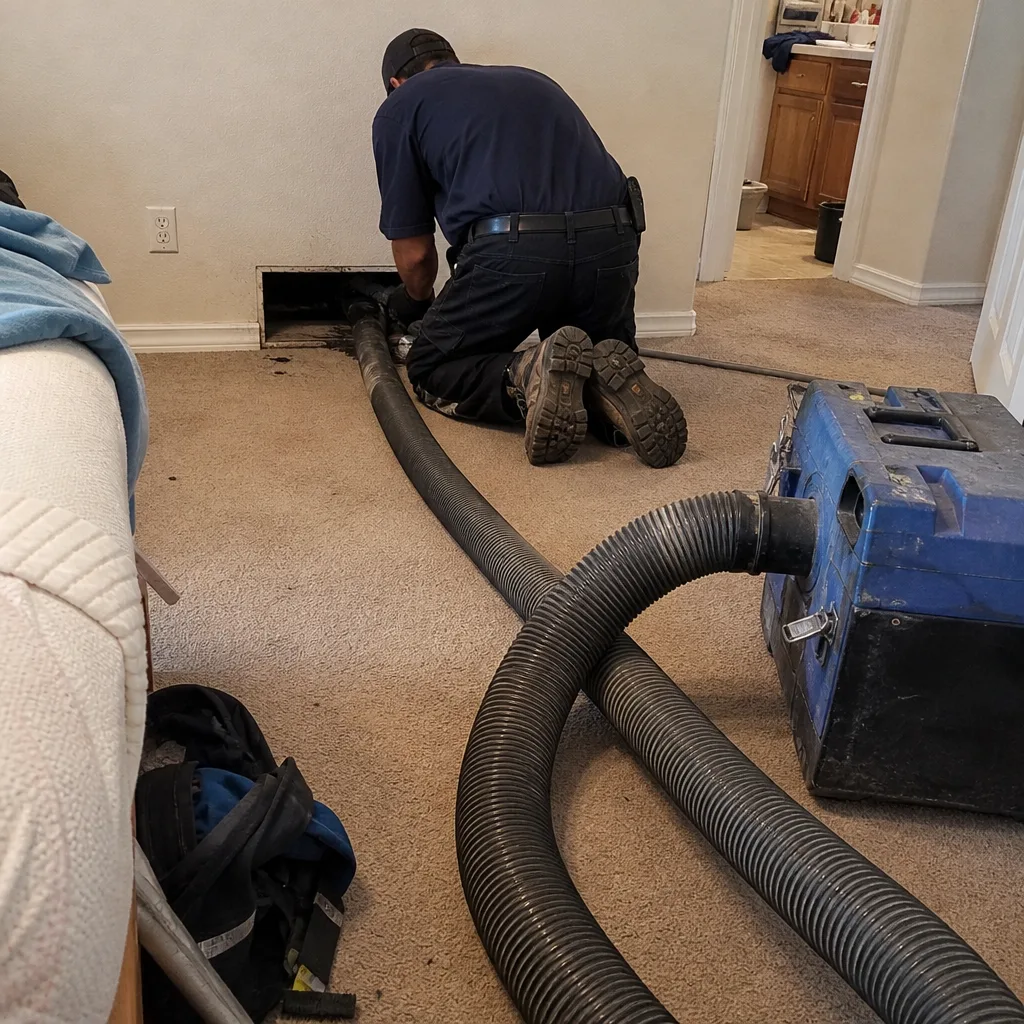 Before
 After
 Before
 After
 Before
 After
When to Call a Professional
There are clear moments to call in a professional rather than wait for the next planned cadence. If you’ve just finished a renovation and the supply registers are visibly dustier than before, that’s a call. If your July and August tracking shows the delta between return and supply air narrowing over the season, that’s a call. If your last cleaning was more than 24 months ago and you’re heading into spring, that’s a call. If a technician has found a crushed flex run or a disconnected collar and you don’t yet have a repair path, that’s a call. If the CO detector on your gas heat system has ever shown signs of concern, that’s a call to a licensed HVAC contractor, and duct cleaning comes after the safety issue is resolved. Kingsley Air Duct Cleaning offers free estimates in Sunrise Manor – call (844) 719-0477 for an assessment.
Frequently Asked Questions
Most Sunrise Manor homes are well served by a full cleaning every two to three years, moved earlier if you’ve had a renovation, a filter failure, or visible performance change. Annual cleaning is frequently recommended but rarely necessary for a typical household. Homes with pets, heavy dust exposure near the desert edge, or allergy-sensitive occupants often run on the shorter end of the two-to-three-year range. Call (844) 719-0477 for a specific recommendation based on your system.
March and April are the ideal window for most homes, before the cooling system moves into peak summer load. October is the second-best window, right after the cooling season ends and before heating demand arrives. If your system is showing performance problems mid-summer, don’t wait for October; a mid-season cleaning is cheaper than a coil replacement. A call to (844) 719-0477 gets you a schedule recommendation specific to your home.
Sunrise Manor duct cleaning is priced per system by written estimate, not per vent, and we don’t quote teaser coupon rates that turn into larger invoices once the technician is on site. One flat price per system, agreed before work starts, with before-and-after photos of your own ducts at the end. Call (844) 719-0477 and we’ll set up a free estimate – the written price is the final price.
The lowest quote usually reflects a visual-only cleaning that skips the return plenum, the coil inspection, and the attic flex duct check, or it reflects a teaser price that grows once the technician is on site. A per-vent price that looks low up front rarely reflects the total cost of a real job. One flat price per system, agreed in writing before work begins, is the honest way to compare quotes. For an apples-to-apples estimate, call (844) 719-0477.
Ask for before-and-after photos of your own ductwork as a condition of the estimate, and check that the inspection report includes airflow readings and coil condition. A company that can’t produce those photos or document what it found can’t prove the work was done. Our inspections are documented this way, with the before-and-after photos included as part of the job. Call (844) 719-0477 to schedule an estimate.
Duct cleaning supports cleaner supply air and reduces the dust load that stresses the heat exchanger, but it doesn’t replace a combustion inspection. If you use gas heat, have the heat exchanger inspected by a licensed HVAC technician before winter demand, and keep a working CO detector on every level of the home. Duct work follows the safety confirmation, not the other way around. Call (844) 719-0477 to schedule the duct side of that plan.
The Bottom Line
For Sunrise Manor homeowners, the useful seasonal framework is built around the HVAC workload cycle, not the calendar. March and April are the highest-value window, when inspection and any needed repair can happen before the cooling season drives load. Mid-summer tracking – register temperature deltas, filter loading rate, register dust – tells you whether the system is degrading faster than expected. October is the read-the-results month, when duct wear from a full cooling season shows up clearly. Winter heating prep is about combustion safety first and duct cleanliness second. Clean on a two-to-three-year cadence timed to those stress points, document the inspection with photos, and keep repair capability in the same relationship as cleaning. That’s the framework most Sunrise Manor homes actually need.
If you’re ready to time your next cleaning around the system’s stress points rather than an arbitrary date, we can help. Kingsley Air Duct Cleaning offers free estimates in Sunrise Manor – call (844) 719-0477. We answer 24/7. Fast dispatch from 7am to 7pm, Sunday through Friday. Our technicians have up to 13 years of experience, and we use professional-grade Rotobrush and Nikro equipment on every job, with a written before-and-after photo record of your own ducts.
Written by the team at Kingsley Air Duct Cleaning.