
Last updated November 15, 2026
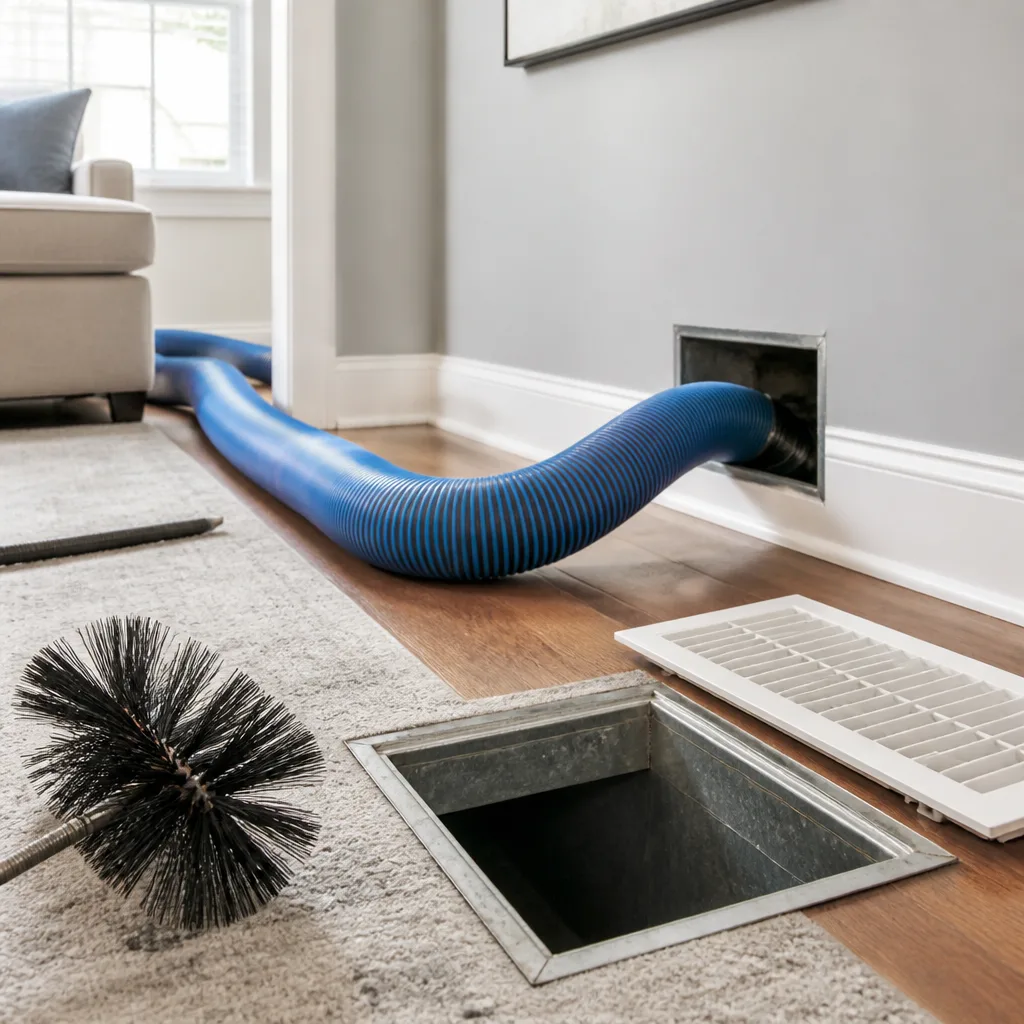 Whole-home duct cleaning
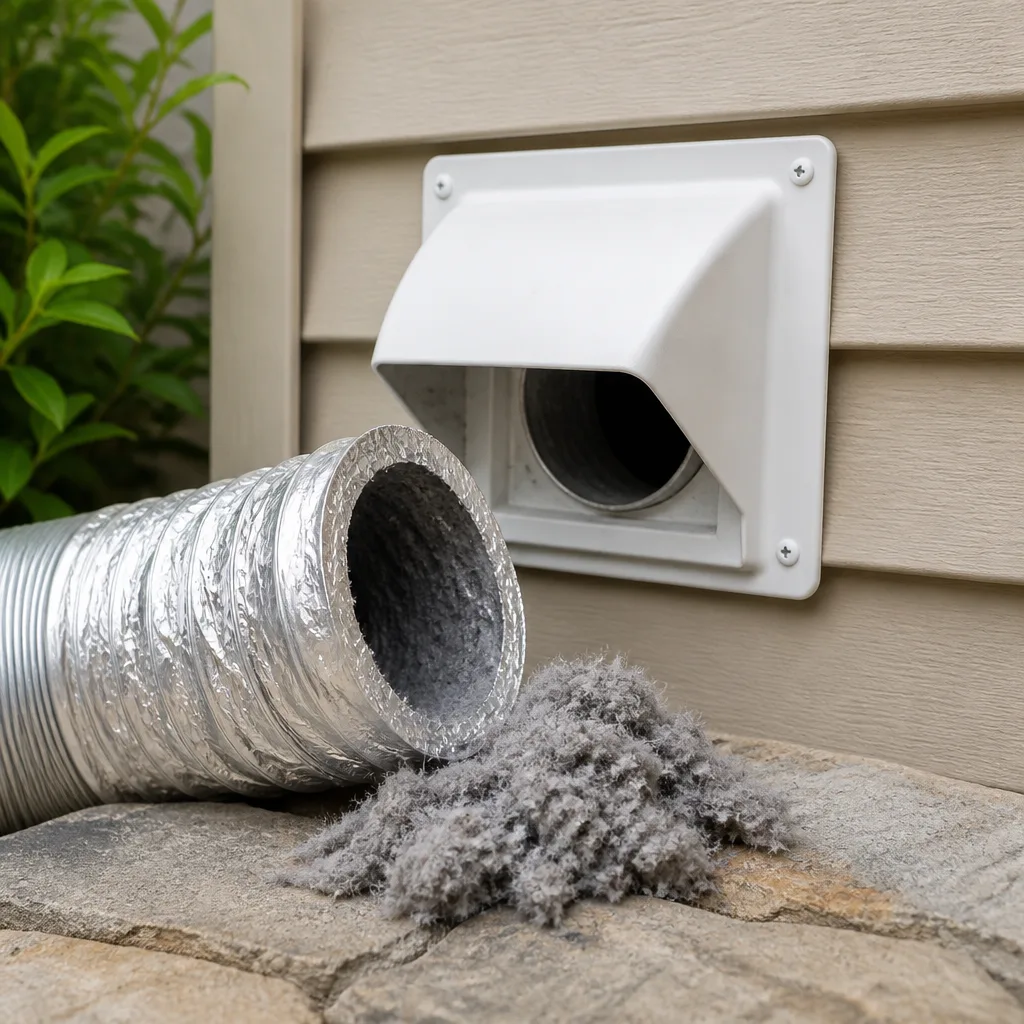 Dryer vent cleaning
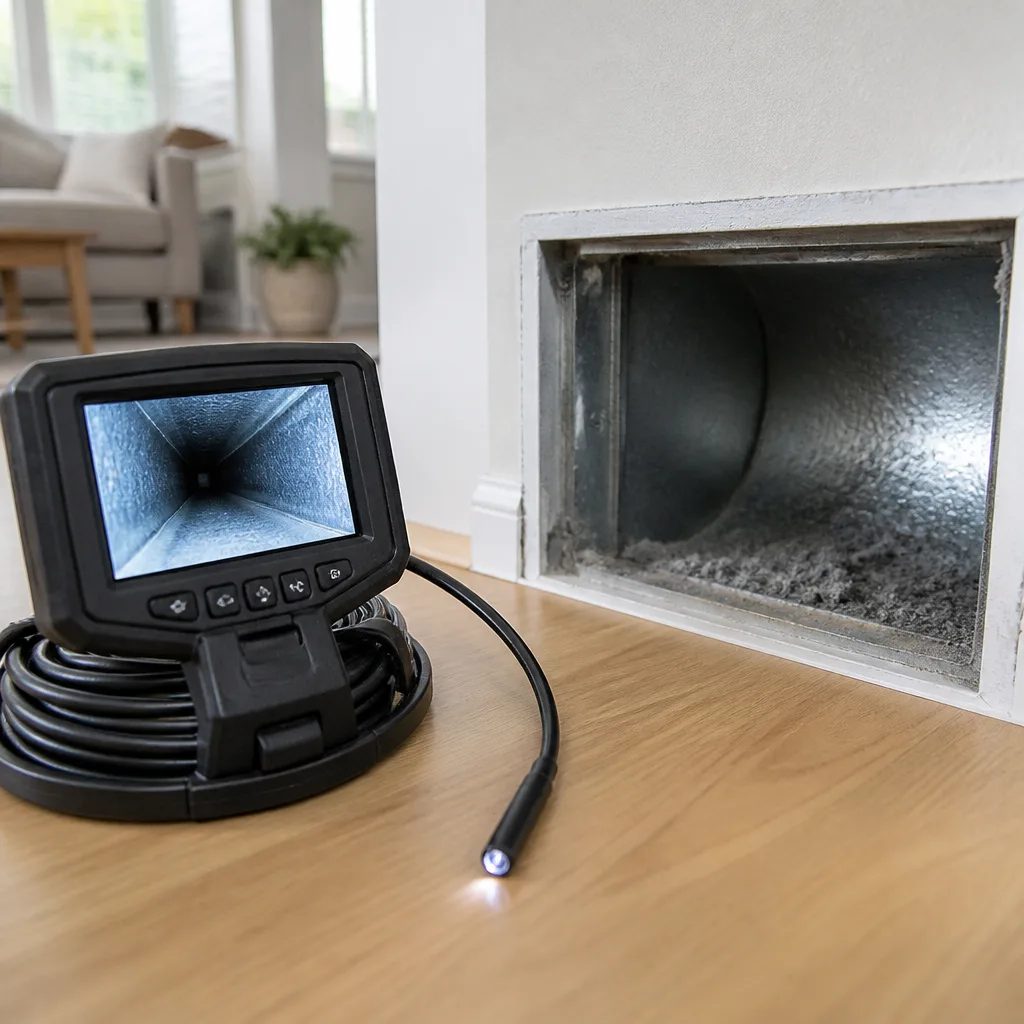 Camera inspection
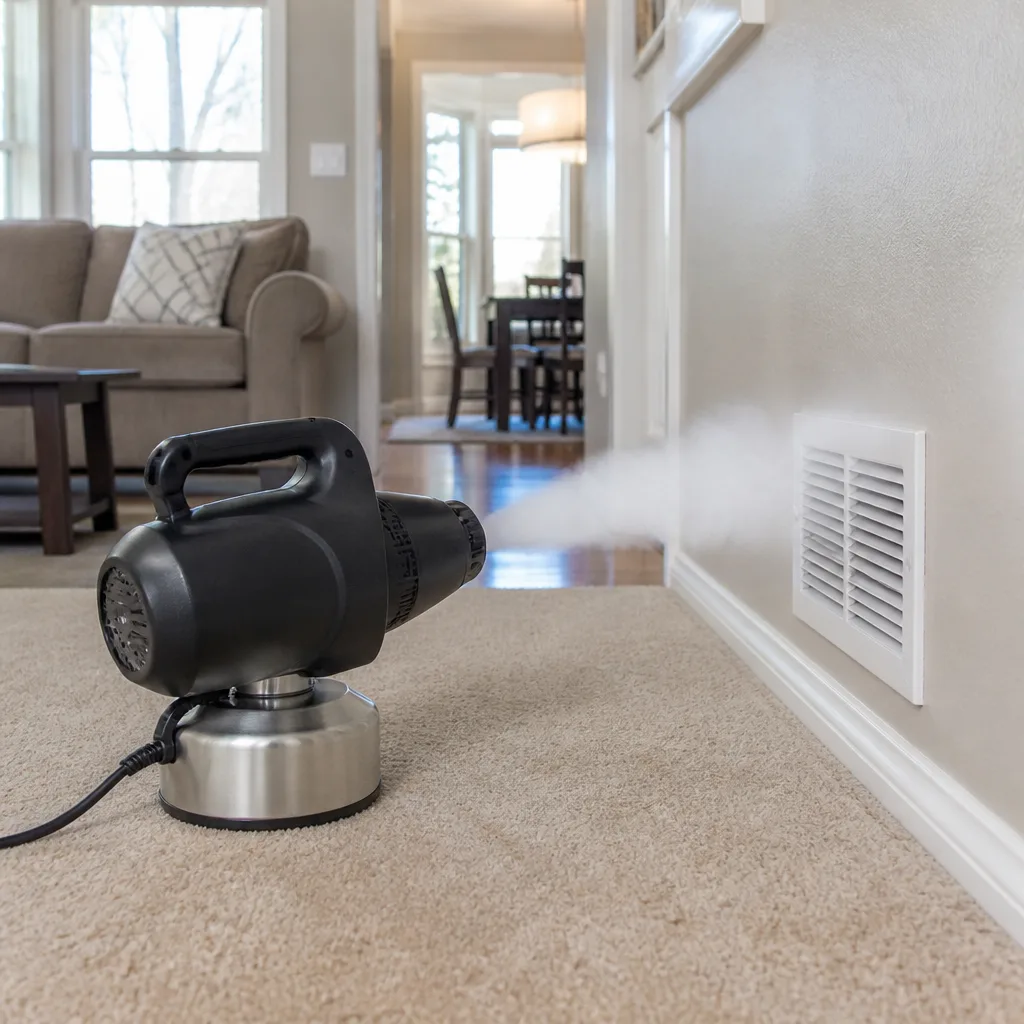 Sanitizing & deodorizing
Whole-system duct and dryer vent check with before-and-after photos - you see exactly what came out of your vents
That "$99 whole-house special" is a bait ad - the real number appears once they are in your hallway, or the "clean" is a shop-vac at the register. We photograph the inside of your ducts before and after instead.
Air Duct Cleaning Warning Signs: A Sunrise Manor Homeowner’s Reference Guide
Visible dust puffing out of a register when the system kicks on is not “normal for older homes.” It’s a contamination indicator, and it means your air system is redistributing debris instead of moving clean air. Most warning-sign checklists floating around online were written for humid climates, so they lead with musty smells and moisture problems that barely exist here. In Sunrise Manor, the signals look different: fine sand at the register edges, gritty film that comes back days after you wipe it, rooms that never quite cool the same as the rest of the house. This guide walks through the signs that actually apply to a desert home, how to read them, and how to tell a scheduled cleaning from a call today.
Quick Answer
Air duct cleaning warning signs in Sunrise Manor usually show up as visible dust blowing from registers, a gritty film on surfaces that returns soon after cleaning, uneven room temperatures in single-story slab homes, and odors that persist when the system runs. If you notice one or two of these, a professional inspection makes sense before the problem grows. If you notice dust plumes, pest odor, or a sudden drop in airflow, treat it as urgent.
Styles & brands we work with
- Whole-home duct cleaning
- Dryer vent cleaning
- Camera inspection
- Sanitizing & deodorizing
Table of Contents
- The Desert-Specific Warning Signs National Checklists Miss
- HVAC Performance Signs That Point to Duct Restriction
- Odor Diagnostics: Rodent, Dust-Burn, or Mold
- Post-Renovation Warning Signs in Sunrise Manor
- Urgent vs. Scheduled: A Triage Framework
- What a Proper Inspection Actually Involves
- Dryer Vent Warning Signs You Shouldn’t Ignore
- When the Problem Is Duct Repair, Not Cleaning
The Desert-Specific Warning Signs National Checklists Miss
Most duct cleaning articles are written by people who picture a damp basement in the Midwest. They focus on moisture, mildew, and humidity-driven condensation. Sunrise Manor doesn’t have those problems in the way a humid climate does, so the standard checklist is partly useless here. What we do have is mineral dust, fine sand, and a dry climate that pushes a different kind of contamination into your ducts.
The big one is caliche. Caliche is the calcium-carbonate hardpan common across the Mojave, and the fine dust it produces carries a mineral grit that clings to surfaces. You’ll see it as a chalky white-gray film around the edges of return registers, on the slats of supply vents, and sometimes on the ceiling around a register. It’s not just dust sitting on top of the vent cover. When you see it concentrated at the edges where air escapes past a loose seal, that’s a sign the duct system is pulling in unfiltered air.
Here’s what to watch for:
- White or gray mineral film at register edges, especially on return vents, that keeps coming back after cleaning.
- Gritty film on furniture and shelves within a few days of wiping. Normal desert dust is fine and airborne; gritty mineral dust tends to fall out of the airstream in larger particles.
- Sand accumulation inside supply boots, which you can sometimes see by removing a register and looking up into the duct.
- Dust trails on the ceiling radiating from a register, showing air escaping a poorly sealed connection.
- Grit in the blower compartment or on the evaporator coil, which a technician can check during a routine service call.
If you’re noticing these, the system is moving mineral debris around rather than filtering it out. Professional air duct cleaning with the right equipment is the way to reset the system, and we use Rotobrush and Nikro systems on every job for exactly this reason. Consumer vacuums and shop vacs can’t generate the airflow or agitation needed to move mineralized dust out of a duct run.
HVAC Performance Signs That Point to Duct Restriction
Your ducts are a delivery network, and when they’re restricted, the symptom shows up at the far end. In Sunrise Manor’s single-story slab homes, most of the ductwork runs through the attic, which can reach extreme temperatures in summer. That means a restricted duct isn’t just delivering less air. It’s delivering air that’s been sitting in a hot attic space long enough to lose its cool.
The most common pattern we see: one or two rooms that never get comfortable while the rest of the house is fine. Maybe a bedroom at the far end of the run. Maybe the room over the garage. Maybe a bathroom. These aren’t random comfort complaints. They’re usually a signal that a duct is restricted, disconnected, or leaking somewhere between the air handler and the register.
Watch for these HVAC signs:
- Uneven cooling between rooms, especially rooms at the end of a long duct run.
- Reduced airflow at specific registers when you hold your hand a few inches in front, compared to others.
- Longer run times than you remember from the same time last summer.
- Whistling or hissing at a register, which usually means a pressure problem.
- Higher-than-expected energy bills, especially in the peak months of June through September when Sunrise Manor stays hot well into the evening.
- A room that cools only when the door is open, which often points to a return path problem in a sealed room.
If two or more of these line up, the answer isn’t a bigger AC. It’s a duct inspection. The issue might be accumulation inside the run. It might also be a disconnected joint or a crushed flex duct in the attic. That’s what separates Kingsley Air Duct Cleaning from clean-only vendors: we handle both cleaning and repair, so if an inspection turns up a broken section, you’re not making a second call.
Odor Diagnostics: Rodent, Dust-Burn, or Mold
Odors are one of the most misread signals in a desert home. People smell “something” when the system runs and immediately assume mold, but in a Sunrise Manor climate, mold is rarely the answer. The three smells you’re most likely to encounter have different meanings and different urgency.
Rodent intrusion odor is the one to treat seriously. It’s a musky, ammonia-tinged smell that gets worse when the system first turns on, or a sickly sweet smell if there’s been a rodent die-off in an attic duct run. Desert rodent activity in attics is common, and the insulation jacket on flex duct is easy for them to gnaw. If you smell this, treat it as urgent because the contamination source won’t resolve on its own.
Dust-burn smell is closer to a hot, dry, metallic or dusty odor that shows up for the first few minutes after the system kicks on. It’s often dust settling on the heat exchanger or the electric heat strip burning off. It can also come from dust accumulated inside the duct near the air handler. This is usually the least urgent of the three, though if the smell persists beyond the first few minutes, the system needs a look.
Mold odor is a musty, earthy, wet-cardboard smell. In a dry climate, mold in ducts is unusual but not unheard of, usually tied to a swamp cooler that was improperly converted, a persistent evaporator-coil drip, or a moisture leak in the attic duct jacket. If you smell this and you’ve had any moisture event, treat it seriously and have it inspected.
- Musky, ammonia, or dead-animal smell: rodent intrusion. Urgent.
- Hot metallic or dusty smell that fades within a few minutes: dust burn-off. Schedule an inspection.
- Musty, wet-cardboard smell: moisture-related, possibly mold. Inspect promptly, especially after any moisture event.
- Chemical or solvent smell: usually not duct-related. Investigate the source before running the system.
Post-Renovation Warning Signs in Sunrise Manor
Clark County has been one of the busiest new-construction and renovation markets in the country, and Sunrise Manor sits inside that activity. If your home has just gone through a remodel, an addition, or even a bathroom refresh, your ducts were probably a lower priority than the crew’s schedule. That’s the problem.
Drywall dust is not like normal household dust. It’s fine, alkaline, and mildly abrasive, and it settles wherever air moves. During a renovation, that means inside open duct runs, behind register covers, and on the evaporator coil. If your HVAC system ran at all during the work, it pulled fine gypsum dust through the return side and redistributed it across the whole house.
The signs to watch for after a renovation:
- New gritty film on horizontal surfaces that wasn’t there before the work started.
- A white or pale-gray powdery residue visible inside register covers.
- Sneezing, itchy eyes, or throat irritation in the days after the work finished, especially when the system runs.
- A “new” or chalky smell from the first minutes of system run time.
- The AC running longer than before, likely because the coil is coated.
The right sequence after a renovation is: replace the filter first, then schedule a duct cleaning. The filter change alone won’t reach the debris that’s already sitting inside the duct runs or on the coil. A professional cleaning with proper equipment handles both. This is also a good moment to have us look at the coil and blower compartment while the system is open, which is where the Honeywell and Aprilaire filtration equipment fluency becomes useful. If you’re still on a builder-grade filter, we can tell you what your return can actually accommodate before you spend money on an upgrade that won’t fit.
Urgent vs. Scheduled: A Triage Framework
Not every warning sign means “call today.” Some are a sign to book a cleaning in the next few weeks; some mean shut the system down and get someone out. Here’s how we think through the triage in Sunrise Manor homes.
Treat as urgent and call now:
- Visible dust plumes from multiple registers when the system starts.
- Rodent odor or visible rodent evidence in or around a register.
- A musty smell after any moisture event such as a coil leak or ceiling leak.
- A sudden, dramatic drop in airflow to one side of the house.
- Any sign of overheating at the air handler (burning smell that doesn’t fade).
Schedule a cleaning within the next few weeks:
- Gritty film returning within a few days of wiping.
- Visible mineral accumulation at register edges.
- Uneven cooling between rooms that’s been drifting for a season.
- Recent renovation or construction activity in the home.
- Longer run times compared to last summer, with no change in filter upkeep.
Note it and keep watching:
- A faint dust-burn smell for the first minute after startup, which is often normal for the season.
- Light dust on top of register covers, which is expected in a desert home.
- One squeaky register grille.
If you’re not sure which bucket your situation falls into, the honest answer is to have someone look. A visual inspection takes minutes and tells you far more than the checklist on your own.
What a Proper Inspection Actually Involves
An inspection is not a salesperson shining a flashlight at a vent. It’s a systematic look at the whole air path, and the tools matter. Here’s what our process looks like when we inspect a Sunrise Manor home:
- Register-by-register review. We remove and inspect each supply and return cover, looking for debris accumulation, mineral deposits, and gaps in the boot-to-duct connection.
- Access panel and attic inspection. We look at the air handler, blower compartment, and evaporator coil for dust loading. We also check attic duct runs for crushed, disconnected, or rodent-damaged sections.
- Camera inspection where useful. A small camera gives us a direct look down a duct run without disassembly, which is often the fastest way to see what’s causing restriction or accumulation.
- Airflow and pressure check. A simple static pressure reading across the system tells us whether restricted ducts are driving the performance problem.
- Filtration assessment. We look at the filter slot, the return size, and the existing filter, then talk through whether the home is compatible with a higher-MERV upgrade or a media cabinet like the Aprilaire models we work with.
- Written findings. You get a plain-language summary of what we found and what we recommend. No pressure, no bundling, no upsells you didn’t ask about.
Our technicians have up to 13 years of experience, and the tools we use on every job are Rotobrush and Nikro systems, the same professional-grade equipment used in restoration and abatement work. The reason that matters is simple: what’s pulled out of your ducts has to actually leave the system. Consumer-grade vacuums can agitate debris, but they don’t have the filtration or airflow to remove it.
Dryer Vent Warning Signs You Shouldn’t Ignore
Lint in a dryer vent is not a cosmetic problem. It’s a documented residential fire risk, and it’s a common one. In a Sunrise Manor home, the dryer vent run often goes up through a wall and out the roof or through a side wall, which means a longer vertical path for lint to accumulate. The signs are straightforward:
- Clothes take two cycles to dry when one used to be enough.
- The dryer feels noticeably hot to the touch on the side or top.
- There’s a burning smell when the dryer runs.
- Lint accumulates around the lint trap area or on the outside vent flapper.
- The outdoor vent flapper doesn’t open fully, or there’s visible lint at the exterior cap.
If you notice two or more, treat it as urgent and stop using the dryer until it’s been looked at. Professional dryer vent cleaning is a discrete service in what we do, not an add-on to a duct cleaning. If you’ve already booked a duct cleaning, we can schedule the dryer vent on the same visit, but it’s a separate job with its own tools and its own check-through.
When the Problem Is Duct Repair, Not Cleaning
Cleaning can only solve so much. If the ducts themselves are compromised, cleaning them without repairing them is a waste of money. In Sunrise Manor’s older single-story homes, and especially in attic duct runs, we commonly find:
- Disconnected joints where flex duct has separated from a boot or trunk fitting.
- Crushed or kinked flex duct from an earlier installation or attic work.
- Rodent-damaged jacket sections where the outer insulation has been chewed through.
- Tape-sealed connections that have failed in the heat of a summer attic.
- Sagging runs where the plastic strap has failed.
Any of these will pull unfiltered attic air into the system and deliver a fraction of the airflow the run was designed for. That’s the reason we offer repair alongside cleaning: if the inspection turns up one of these issues, we can fix it in the same relationship rather than pushing you toward another vendor. Most clean-only duct companies walk away from the repair. We don’t.
Repair work should always follow an inspection, never precede it, and never be sold as a bundled package before anyone has looked. If a contractor quotes you repair work over the phone without seeing the duct, that’s a reasonable sign to get a second opinion. The written estimate should list what’s being fixed, why, and what the price is per job.
Common Mistakes to Avoid
- Trusting a per-vent price. Per-vent pricing rewards the contractor for adding vents and doesn’t reflect the actual scope of the job. A whole-system flat price agreed before work starts is the honest structure.
- Booking the lowest bid without asking about equipment. The truck in the driveway should have professional equipment in it. If the answer to “what equipment do you use” is vague, that’s a flag.
- Believing the system is clean because someone sprayed a sanitizer. Sanitizer treats the surface, not the debris. If the ducts aren’t cleaned properly first, the sanitizer is decoration.
- Cleaning the ducts after construction without changing the filter first. The new filter catches what the system pulls in next, but only if it’s not already clogged from the renovation dust.
- Ignoring the dryer vent because the ducts were just cleaned. They’re separate systems, and dryer vent lint accumulates on its own schedule. Treat them independently.
- Assuming a musty smell is mold in a dry climate. In Sunrise Manor, musty-smell complaints more often trace to rodent or moisture events. Get it looked at before treating it.
- Skipping the inspection and going straight to cleaning. Cleaning a system with a disconnected duct just blows the debris into the attic. Inspection first, then cleaning, then repair if needed.
See the difference
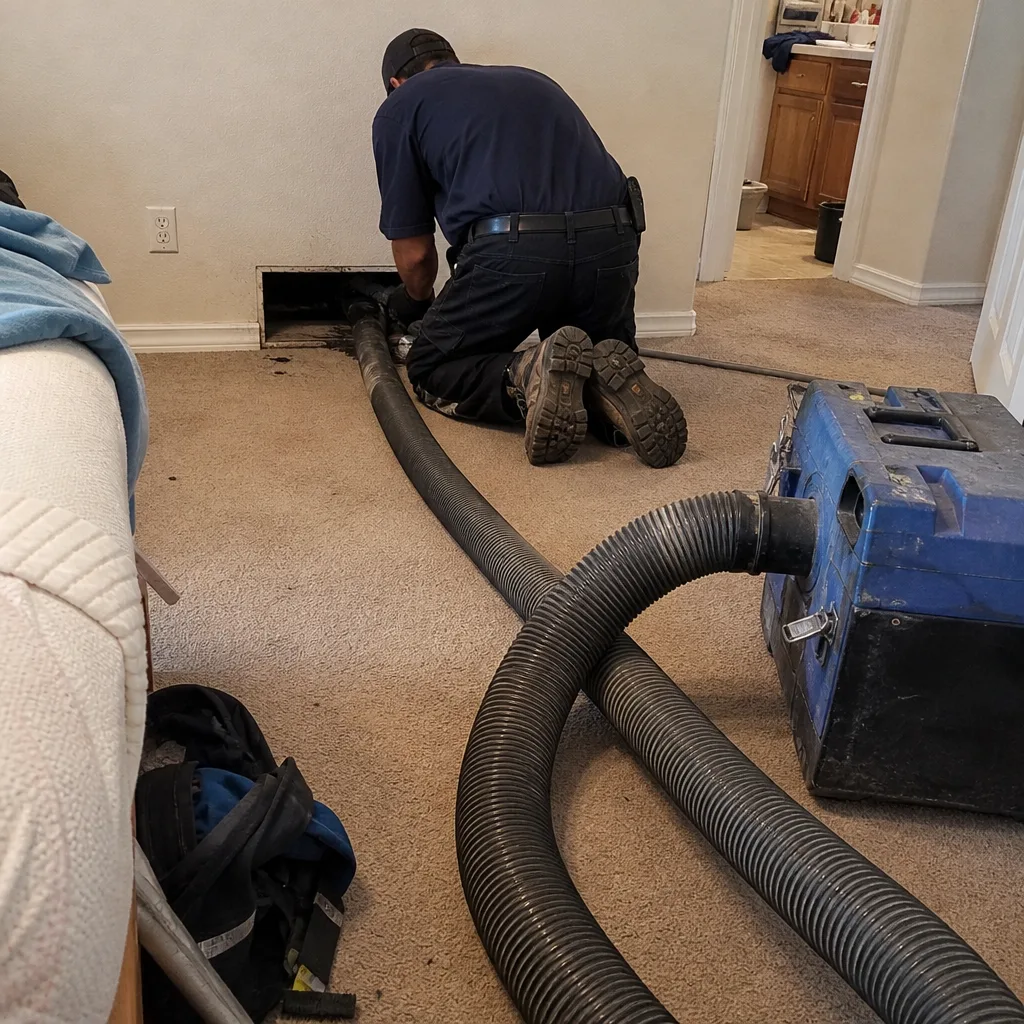 Before
 After
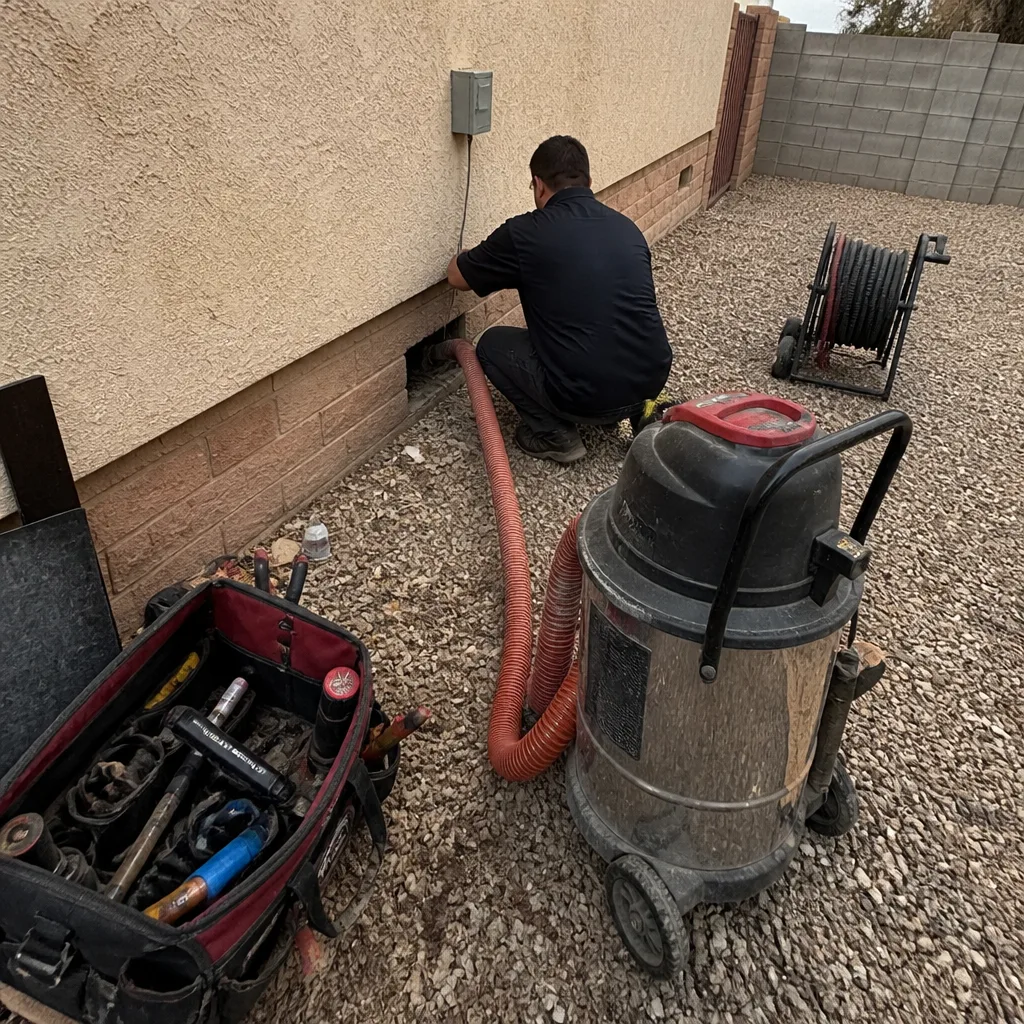 Before
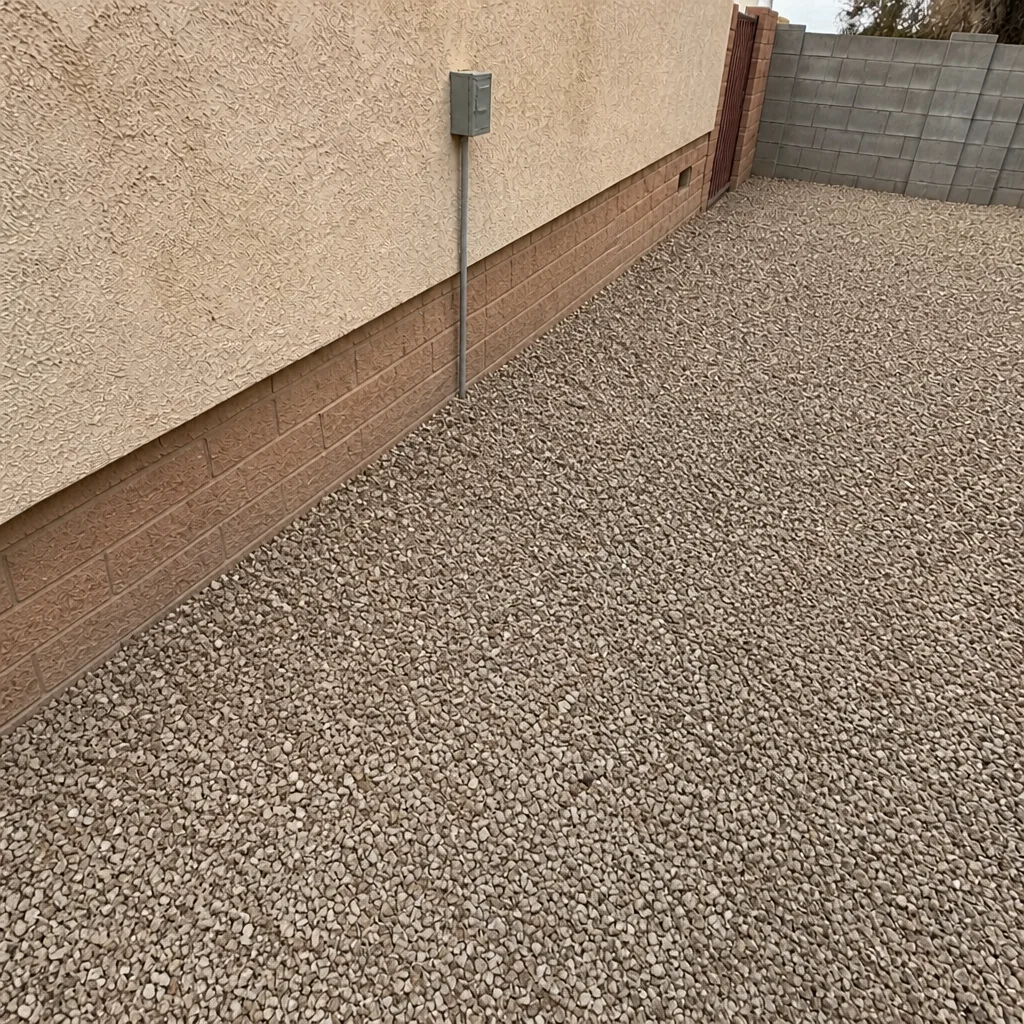 After
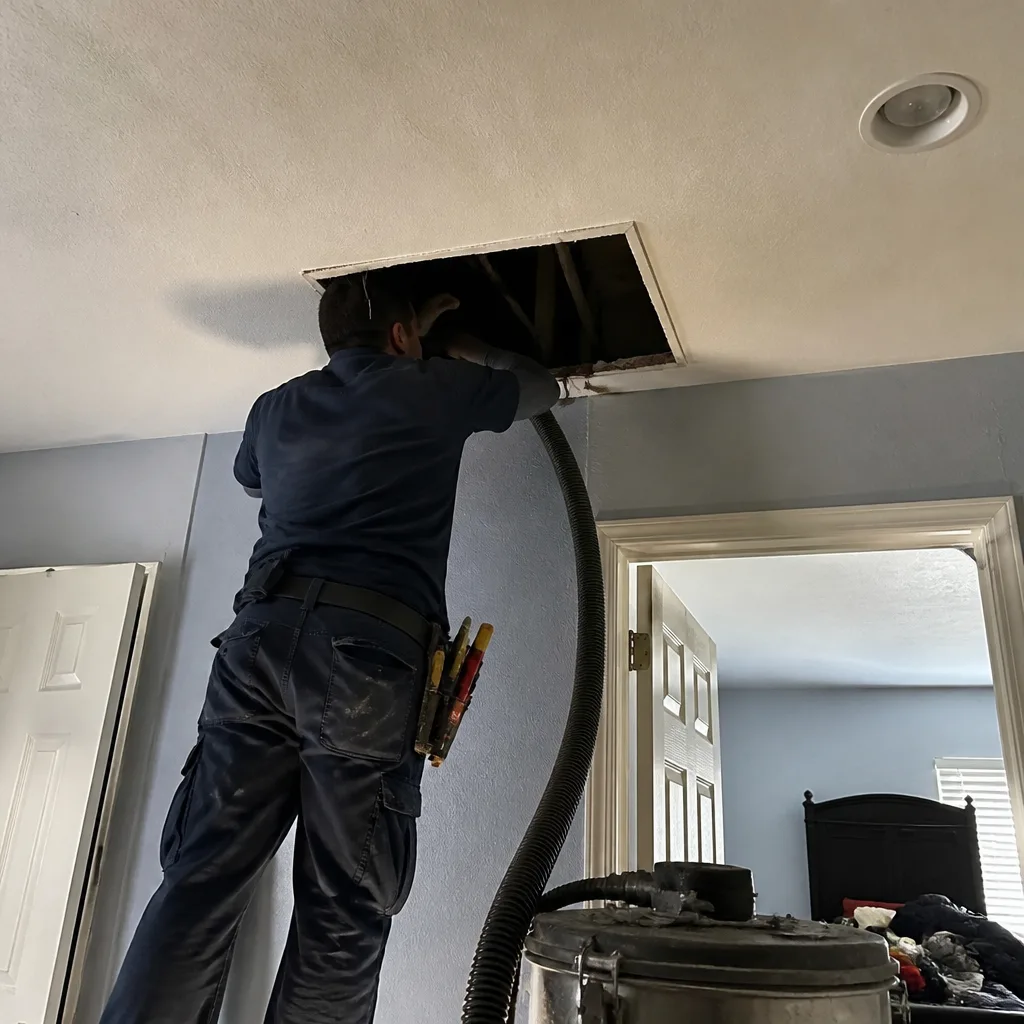 Before
 After
When to Call a Professional
Call a professional if you’ve seen any urgent signal from the triage list above: multiple dust plumes, pest odor, musty smell after a moisture event, or a sudden loss of airflow. Call if you’ve recently finished a renovation and the system has been running through the work. Call if a room has drifted out of balance for more than a season and a filter change hasn’t helped. Call if you’re not sure which category your situation falls into, because a quick inspection answers that question faster than another week of research. Kingsley Air Duct Cleaning offers free estimates in Sunrise Manor. Call (844) 719-0477. We answer 24/7.
If you’d rather check a few things yourself before picking up the phone, that’s fine too. Removing a register and looking up into the duct with a flashlight is safe and tells you something in 30 seconds. So is wiping down a flat surface, waiting a week, and seeing how fast the grit returns. What we’d caution you against is trying to clean a duct run yourself. The wrong tool can dislodge debris into the system without removing it, and attic duct work involves attic heat that’s genuinely dangerous in a desert summer. Leave the actual cleaning to a trained professional.
Frequently Asked Questions
The first signs usually show up as visible dust plumes from registers when the system starts, a gritty film on furniture that returns within days of wiping, and uneven room temperatures in one or two rooms. If the system hasn’t been cleaned in years and any of these are present, it’s reasonable to schedule an inspection.
Most Sunrise Manor homes do well with a cleaning every three to five years, though the desert dust load and heavy local construction activity can shorten that. Homes with pets, recent renovations, or persistent allergy complaints typically benefit from shorter intervals. If you’re seeing any of the warning signs in this guide, the schedule matters less than the answer the inspection gives you.
Dust blowing out of registers when the system starts usually means the supply side of the duct system has accumulated debris that the airflow is picking up and redistributing. It can also indicate a return-side leak pulling attic or wall-cavity air into the system. Either way, it’s a sign of contamination, not a normal quirk of an older home. Call (844) 719-0477 for a free estimate.
Not usually. In a desert climate, a musty smell in the ducts is more often tied to rodent intrusion or a past moisture event like a coil or ceiling leak than to active mold growth. That said, mold is not impossible in desert homes, especially after a swamp cooler conversion or a long-running coil drip. Either way, get it inspected before treating it.
Yes, and it’s one of the most common reasons homeowners call us. In single-story slab homes with attic duct runs, restricted or partially disconnected ducts can cause one or two rooms to run hot while the rest of the house is fine. Before assuming the AC is undersized, have the ducts inspected.
Cleaning removes accumulated debris from inside the ducts. Repair fixes the duct itself, meaning it reconnects or replaces crushed, disconnected, or damaged sections. Cleaning without repair can make the problem worse if the ducts are compromised, which is why we inspect before recommending either. Call (844) 719-0477 for a free estimate.
Dryer vent cleaning is a separate service from duct cleaning, and yes, it usually needs attention on its own schedule. If clothes are taking two cycles to dry or the dryer feels hot on the outside, that’s a sign to get it looked at. Lint accumulation is a documented fire risk, not a cosmetic concern.
Ask for before-and-after photos of your own ducts. A professional cleaning should produce photographic evidence that the system looked different when it was finished, plus a written summary of what the inspection found. If a contractor can’t provide either, that’s your answer. Call (844) 719-0477 for a free estimate.
The Bottom Line
Most of the air duct cleaning guides online are written for a climate that isn’t yours. In Sunrise Manor, the signals that matter are caliche film at register edges, gritty residue that returns in days, uneven cooling in a single-story slab home, and odor patterns you can actually name. Rodent means urgent. Dust-burn usually means schedule. Musty means inspect. Post-renovation always means clean, and often sooner than you think. If you’re past the point of googling whether duct cleaning is worth it, you’re ready to have someone look at the system with proper equipment and show you what they find. Call (844) 719-0477 for a free estimate.
Contact Kingsley Air Duct Cleaning
If you’re seeing any of the signs in this guide and want a straight answer about what’s going on in your system, call (844) 719-0477 for a free estimate. We answer 24/7. Fast dispatch from 7am to 7pm, Sunday through Friday. Our technicians have up to 13 years of experience, and we work across Sunrise Manor with the same professional-grade equipment on every job: Rotobrush and Nikro cleaning systems, and familiarity with the air-quality hardware in your home from Honeywell, Aprilaire, and Abatement Technologies. One flat price per system agreed before work starts. Before-and-after photos of your own ducts when the work is done. Cleaning, dryer vent service, and repair under one roof, so you don’t need a second contractor to fix what the inspection finds.
Learn more about Sunrise Manor and what makes its air system demands different from the rest of the valley, or read our full air duct cleaning service page for what’s included in a standard job. And if you’re already thinking about the dryer vent, our dryer vent cleaning service handles that separately, with the safety focus it deserves.
Written by the team at Kingsley Air Duct Cleaning.